

SNAP Benefits Calculator 2026: Discover If You Qualify for Food Assistance
Introduction: What Is a SNAP Benefits Calculator?
Buying groceries can be difficult when household expenses keep increasing and income does not cover every need. For many families and individuals in the United States, food assistance can provide valuable support during financially challenging times. However, before applying, people often have questions about eligibility, income requirements, and the amount of assistance they might receive.
A SNAP calculator can help answer some of these questions. SNAP stands for the Supplemental Nutrition Assistance Program, a government program that helps eligible households pay for groceries. An online calculator uses information such as household size, income, and certain expenses to estimate whether a household might qualify for benefits.
Using a SNAP benefits calculator in 2026 can be a practical first step if you want to understand your options before beginning an application. It can help you organize your financial information and learn which factors may affect your eligibility.
However, a calculator does not guarantee approval. Actual eligibility and benefit amounts depend on current program rules, household circumstances, and the information reviewed by the responsible state agency.
In this guide, you will learn how a SNAP calculator works, who may qualify for food assistance, how income and expenses affect benefit estimates, and what to do if you think you are eligible.
1. What Is SNAP and How Does It Help Families?
The Supplemental Nutrition Assistance Program, commonly known as SNAP or food stamps, helps eligible low-income households purchase food. It is a federal nutrition assistance program administered by states under federal requirements.
The purpose of SNAP is to help households manage grocery expenses when their available income is limited. Food assistance can make it easier for people to purchase nutritious food while managing other essential costs, such as housing, transportation, childcare, and utilities.
Approved participants generally receive benefits through an Electronic Benefit Transfer card, commonly called an EBT card. Benefits are added to the card and can be used at participating retailers to purchase eligible food products.
SNAP benefits generally cover eligible items such as:
- Fruits and vegetables
- Bread, cereals, and grains
- Meat, poultry, and fish
- Milk, cheese, and other eligible dairy products
- Seeds and plants that produce food for household consumption
- Other eligible grocery products
SNAP generally cannot be used to purchase alcohol, tobacco, vitamins, medicines, or hot foods prepared for immediate consumption, subject to specific program rules and exceptions.
People who may qualify include working households with limited income, families with children, eligible older adults, and people with disabilities. Eligibility depends on the applicable requirements rather than simply belonging to one of these groups.
A SNAP calculator can help people understand how their income and household circumstances may affect their potential eligibility. It is particularly useful for those who want an initial estimate before completing an official application.
2. How Does a SNAP Calculator Work?
A SNAP calculator estimates possible eligibility or benefit amounts using financial and household information entered by the user. The exact questions depend on the calculator, and some tools are designed for particular states while others provide general estimates.
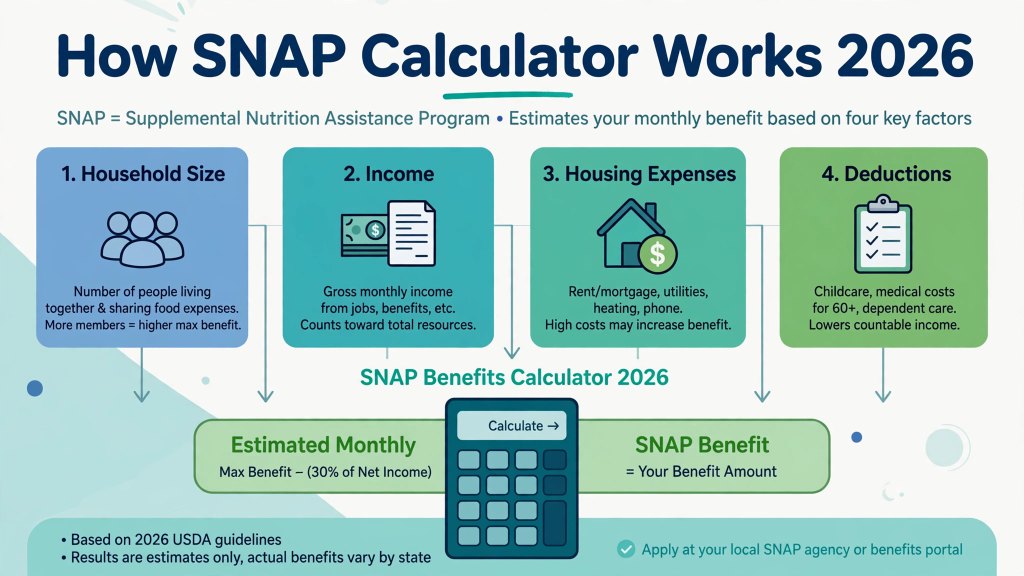
Most calculators consider several important factors.
Household Size
Household size can influence both income eligibility and the potential amount of assistance. However, the number of people living at an address does not automatically determine the SNAP household size.
SNAP has specific rules for deciding who must be included together. For example, spouses who live together and certain children living with their parents generally must be included together under applicable household rules.
Monthly Income
The calculator may ask about employment income and other income sources. Depending on the tool, you may need to enter gross income, income by source, or other financial details.
Gross income generally refers to income before deductions. Net income for SNAP purposes is determined under program rules after applicable deductions are considered.
Housing and Utility Expenses
Certain housing and utility expenses may affect the calculation. The relevant details can include rent, mortgage-related shelter costs, and qualifying utility expenses.
Not every housing expense is treated in the same way, and specific limits or exceptions may apply.
Other Eligible Expenses
Some calculators ask about childcare, dependent-care costs, or medical expenses for qualifying older adults and people with disabilities.
These expenses can affect an estimate when they qualify under SNAP rules.
Understanding Your Result
After you enter the requested details, the calculator provides an estimate. Depending on the tool, this may indicate whether you might qualify, how much assistance you could potentially receive, or both.
For example, imagine two households with the same monthly income. One household has two members, while the other has four. Their estimated results may differ because household size and other financial circumstances affect the calculation.
The important point is that a SNAP calculator is an estimation tool, not an official eligibility decision. The state agency reviews the actual application and determines eligibility under the rules that apply to the household.
3. Who May Qualify for SNAP Benefits in 2026?
SNAP eligibility depends on several factors. Income is important, but it is not the only consideration.
Understanding the general requirements can help you decide whether using a SNAP eligibility calculator is a useful next step.
Income Requirements
Many households must meet applicable income tests. The limits can depend on household size, location, benefit period, and particular eligibility circumstances.
Some households may qualify under special rules or exemptions. For that reason, an income figure by itself does not always provide a complete answer.
A SNAP calculator can help you organize income information and estimate whether your household might meet the applicable requirements.
Household Composition
SNAP household rules determine which people are counted together when eligibility and benefits are calculated.
People who live at the same address are not necessarily all part of one SNAP household. At the same time, certain family members must generally be included together under specific program rules.
When using a calculator, enter household information carefully and follow its instructions.
Citizenship and Immigration Requirements
Applicants must meet applicable citizenship or eligible noncitizen requirements. Different rules may apply depending on immigration category and individual circumstances.
If you are unsure whether your household meets these requirements, seek guidance from the responsible state agency or a qualified benefits adviser.
Work Requirements
Certain adults may be subject to general SNAP work requirements or additional time-limit rules. Exemptions and exceptions can depend on factors such as age, disability, caregiving responsibilities, and other circumstances.
Do not assume that every adult faces identical work requirements. Check the rules that apply to your situation.
Older Adults and People With Disabilities
Some SNAP rules differ for households that include older adults or people with disabilities. Certain medical expenses and other qualifying costs may affect benefit calculations.
A general SNAP calculator may not account for every special rule, so people with more complex circumstances should review the applicable state guidance.
Ultimately, a SNAP calculator can help you estimate your eligibility, but the state agency makes the official determination after reviewing your application.
4. SNAP Income Limits in 2026: What Should You Know?
Income limits are among the most important factors when estimating SNAP eligibility. However, it is essential to use figures that match the correct benefit period and applicable eligibility rules.
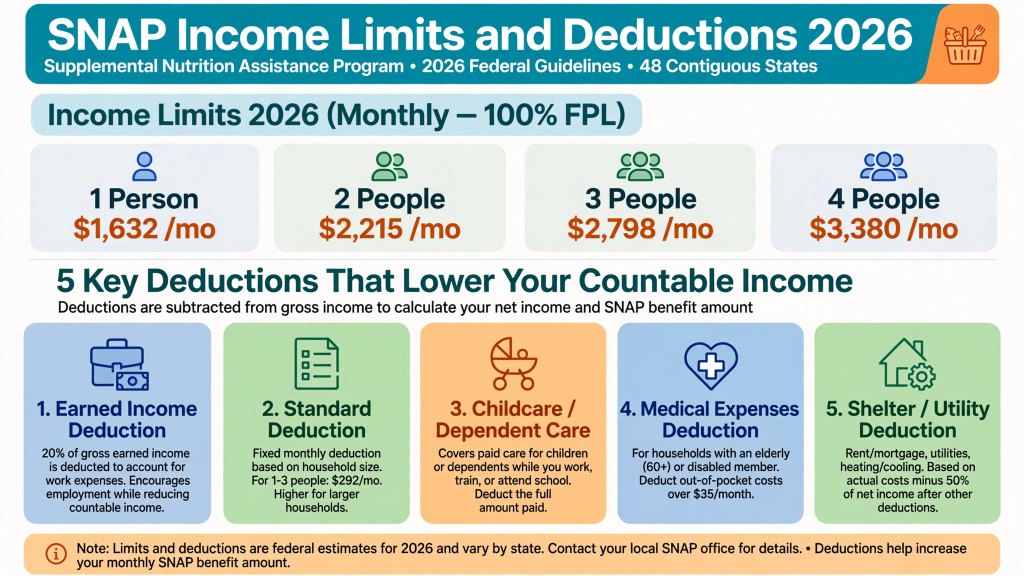
SNAP income requirements can vary depending on household size and other circumstances. Some households must satisfy both gross and net income tests, while certain categories may be subject to different rules.
Gross Income vs. Net Income
Gross income generally means income before taxes and other deductions are taken out.
Net income for SNAP purposes means income calculated under SNAP rules after allowable deductions have been considered. It is not necessarily the same as the amount deposited into your bank account after payroll deductions.
This difference matters because a household’s gross income alone may not tell the complete story.
Why Household Size Matters
Income standards generally increase with household size, although the applicable rules and thresholds must be checked for the relevant period.
For example, a one-person household and a household with four members will not necessarily have the same income limits or benefit calculation.
Why State Rules Matter
States administer SNAP, and certain eligibility policies and procedures may differ. Household category and other circumstances can also affect which standards apply.
If you are searching for SNAP income limits for 2026, avoid relying on outdated charts or figures that apply to a different period.
A SNAP calculator can provide a preliminary estimate, but it should be based on current information. If a calculator does not clearly explain when its figures were updated, treat its results cautiously.
Before publishing or relying on a specific income limit, verify the applicable figures for the relevant state and benefit period.
5. What Information Do You Need to Use a SNAP Calculator?
Preparing your information before starting can make the process easier. It can also reduce the chance of receiving a misleading estimate because of incomplete or incorrect entries.
Although every calculator is different, you may need the following information.
Household Information
You may need to provide the number of people in your SNAP household, their relevant relationships, and other details requested by the tool.
Remember that SNAP household rules determine who must be counted together.
Income Details
Gather information about your household’s income, such as:
- Wages or salaries
- Self-employment income
- Certain unemployment benefits
- Other income sources that may count under SNAP rules
The calculator should explain which income figures it requires. Follow its instructions rather than assuming every income source is treated identically.
Housing and Utility Costs
You may be asked about rent, mortgage-related shelter costs, and eligible utility expenses.
Keep the relevant amounts available so you can enter accurate information.
Childcare and Medical Expenses
Some calculators request information about qualifying dependent-care expenses or medical costs for eligible older adults and people with disabilities.
Only enter expenses according to the calculator’s instructions. Not every expense qualifies for a SNAP deduction.
Protect Your Personal Information
A basic estimate generally should not require you to disclose unnecessary sensitive information.
Be careful with unfamiliar websites that request Social Security numbers, bank passwords, full payment card details, or other information unrelated to providing an estimate.
A trustworthy calculator should clearly explain what information it collects and how it uses that information.
Preparing these details can help you use a SNAP calculator more effectively and understand the factors that may influence your potential benefits.
6. How Much SNAP Food Assistance Could You Receive?
The amount of SNAP assistance a household may receive depends on applicable benefit rules, household size, countable income, and allowable deductions.
Some households may qualify for a higher amount than others because their circumstances are different.
Maximum Benefit Amounts
SNAP has maximum monthly allotments that depend on household size and applicable rules. However, the maximum is not the amount every eligible household receives.
Many benefit calculations account for the household’s net income under SNAP rules. As a result, households with different income levels may receive different benefit amounts even if they have the same number of members.
Maximum allotments and other figures can change with annual adjustments, so always check the current benefit period before quoting exact amounts.
How Expenses Can Affect the Estimate
Eligible deductions can influence the net income used in the benefit calculation.
For example, certain earned income, dependent-care costs, qualifying medical expenses, and shelter expenses may affect the calculation when the household meets the relevant conditions.
This is why two households with similar gross incomes may receive different benefit estimates.
A Simple Hypothetical Example
Imagine two households that have the same number of members but different income levels and qualifying expenses.
Household A has lower countable net income after applicable deductions. Household B has higher countable net income.
Depending on the applicable rules, Household A may receive a higher estimated monthly benefit than Household B.
This example illustrates the general relationship between financial circumstances and benefit estimates. It does not represent an official calculation or guarantee a particular payment.
Using a SNAP benefits calculator can help you explore your potential benefit amount, but the final result depends on the information verified by the state agency.
7. SNAP Deductions That May Affect Your Benefits
Deductions are important because they can reduce the income used to calculate SNAP benefits. However, each deduction has its own requirements, and not every household qualifies for every type.
Understanding the main categories can help you enter information more accurately into a SNAP calculator.
Earned Income Deduction
Eligible households may receive an earned income deduction for qualifying income from work. This can reduce the income counted in the calculation.
The applicable rules determine which income qualifies and how the deduction is calculated.
Standard Deduction
SNAP includes a standard deduction under applicable rules. The amount can depend on the relevant program period and household circumstances.
A calculator may apply this deduction automatically.
Dependent-Care Expenses
Certain childcare and dependent-care expenses may be deductible when they meet program requirements and are necessary for an eligible household member to work, participate in qualifying training, or pursue education under applicable rules.
Not every childcare expense automatically qualifies.
Medical Expenses
Eligible households that include older adults or people with disabilities may be able to deduct certain qualifying unreimbursed medical expenses, subject to program requirements.
Examples may include certain medical services, prescriptions, or other qualifying healthcare costs.
The precise rules determine which expenses count and whether minimums or other conditions apply.
Shelter and Utility Expenses
Eligible shelter expenses may include certain housing and utility costs. Applicable limits and exceptions can affect how much of these costs is recognized.
A SNAP calculator may ask about these expenses to produce a more useful estimate.
Before entering deductions, check whether the tool accounts for them automatically. Avoid subtracting the same expense twice or entering costs that do not meet program requirements.
8. How to Use a SNAP Benefits Calculator Step by Step
Using a SNAP calculator is generally straightforward. The following steps can help you understand the process.
Step 1: Choose Your State
If the calculator offers state-specific estimates, select the state where you live. This helps ensure that the tool uses the most relevant rules available.
Step 2: Enter Your Household Size
Provide the number of people included in your SNAP household according to the applicable rules.
Do not automatically count every person who shares your address.
Step 3: Enter Your Monthly Income
Follow the calculator’s instructions to enter gross income or other requested income details.
If you have multiple income sources, make sure you include the relevant information requested by the tool.
Step 4: Add Eligible Expenses
Enter the requested housing, utility, childcare, or qualifying medical expenses.
Use accurate amounts and avoid including expenses that the calculator does not request or that do not qualify.
Step 5: Review the Estimate
Read the result carefully. Determine whether it provides an eligibility estimate, a potential benefit amount, or both.
Remember that different calculators may use different assumptions.
Step 6: Check Current Eligibility Rules
Review the relevant rules for your state and household circumstances. If the calculator provides a date for its latest update, make sure the information is current.
Step 7: Consider an Official Application
If the estimate suggests that you might qualify, consider applying through your state’s SNAP application process.
You do not need to receive a positive calculator result before seeking an official determination. If you are unsure about your eligibility, the state agency can explain the applicable requirements.
Following these steps can make a SNAP calculator easier to use and help you prepare for the next stage.
9. How to Apply for SNAP Benefits in 2026
After using a calculator, you may decide to submit an official SNAP application. The process generally involves providing household and financial information so the state agency can assess eligibility.
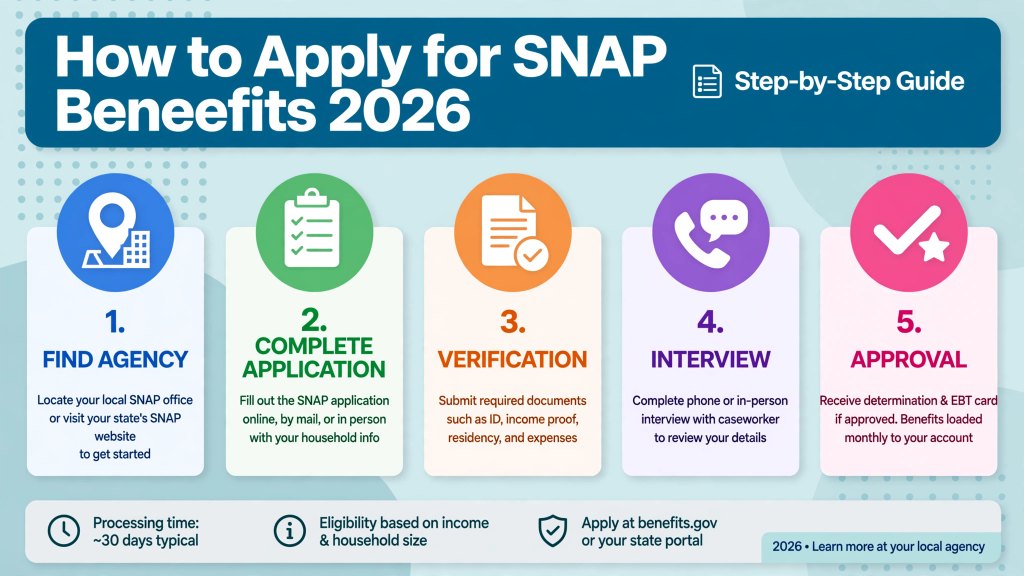
Find Your State’s Application Process
Start by identifying the agency responsible for administering SNAP where you live.
Application methods vary by state. Depending on local procedures, you may be able to apply online, in person, or through other available methods.
Complete the Application
Provide accurate information about your household, income, and other requested details.
Review your answers before submitting them. Incomplete or inaccurate information can delay the review process.
Provide Verification Documents
The agency may request documents to verify income, identity, expenses, or other eligibility details.
Follow the instructions provided by the agency and submit the requested information within the stated timeframe.
Complete an Interview if Required
Some applicants must complete an interview as part of the application process. The agency will explain the procedure and any required next steps.
Wait for the Decision
The state agency reviews the application and determines whether the household qualifies. If approved, the agency provides information about the benefits and how to access them.
A SNAP calculator is not a substitute for applying. It is a planning tool that can help you prepare, understand your potential eligibility, and identify information you may need during the application process.
10. Common Mistakes to Avoid When Using a SNAP Calculator
Even a useful calculator can produce a misleading estimate when the information entered is inaccurate or the tool does not reflect current rules.
Avoid these common mistakes.
Entering the Wrong Income
Some calculators request gross income, while others ask additional questions about different income sources. Read each field carefully before entering a figure.
Counting the Wrong Household Members
SNAP household rules are more specific than simply counting everyone living under one roof. Make sure you understand which people must be included together.
Forgetting Eligible Expenses
If the calculator asks about qualifying expenses, provide accurate details. Missing relevant information may affect the estimate.
Using Outdated Information
Income standards, deductions, and maximum benefit amounts may change. A calculator that has not been updated could produce a less reliable result.
Assuming Every State Is Identical
Federal requirements apply nationwide, but state administration and certain eligibility policies can differ. Use a tool appropriate for your location whenever possible.
Treating an Estimate as a Guarantee
A positive result does not mean your application will automatically be approved. A negative result does not always resolve every eligibility question either.
Be cautious when a website requests personal or financial details that are not necessary for an estimate. Check the website’s identity and privacy practices before sharing information.
The best way to use a SNAP calculator is to enter accurate information, review the assumptions, and verify important details with the responsible agency.
11. What If Your SNAP Calculator Says You Do Not Qualify?
Seeing an estimate that suggests you do not qualify can be disappointing, especially when you are trying to manage grocery expenses. However, an online estimate should not always be treated as the final word.
First, review the information you entered. Check household size, income amounts, and expenses to make sure they are accurate.
Next, determine whether the calculator reflects the rules applicable to your state and current benefit period. Some tools provide general estimates and may not account for every special circumstance.
If you believe you may qualify, consider contacting your state SNAP agency or submitting an application for an official decision. The agency can evaluate your circumstances under the applicable rules.
You may also explore other food assistance options if you need immediate help. Local food banks, community food programs, and other charitable organizations may provide groceries or referrals to additional services.
Remember that the purpose of a SNAP calculator is to provide guidance, not to replace an official eligibility review. If you are uncertain, seek clarification instead of relying entirely on an online result.
12. Frequently Asked Questions About the SNAP Calculator
What Is a SNAP Benefits Calculator?
A SNAP benefits calculator is an online tool that estimates potential eligibility or monthly food assistance using information such as household size, income, and qualifying expenses. It does not make the official eligibility decision.
Is There a Free SNAP Calculator for 2026?
Free online SNAP calculators may be available. Before using one, check whether it is current, whether it accounts for your state, and whether it explains its assumptions.
How Do I Know If I Qualify for Food Assistance?
Your eligibility may depend on income, household composition, allowable deductions, and other applicable requirements. A SNAP calculator can provide an initial estimate, but the responsible state agency makes the official decision.
What Is the SNAP Income Limit for 2026?
There is no single figure that should be assumed to apply to every household in every circumstance. Applicable income standards depend on factors such as household size, benefit period, location, and eligibility category. Verify current figures before relying on a particular amount.
How Much SNAP Can a Family of Four Receive?
The potential amount depends on the applicable maximum allotment, the household’s countable net income, and other relevant circumstances. Not every family of four receives the same monthly benefit.
Does Rent Affect SNAP Benefits?
Eligible shelter expenses can affect the benefit calculation under applicable rules and limits. A calculator may request housing and utility details to estimate how these costs affect the household.
Can I Qualify for SNAP If I Have a Job?
Yes, employment does not automatically disqualify someone from SNAP. Eligibility depends on countable income, household circumstances, and applicable program requirements.
Can I Use a SNAP Calculator Before Applying?
Yes. You can use a SNAP calculator before applying to estimate potential eligibility and prepare financial information. You do not have to use a calculator, and its result does not replace an official application.
How Accurate Are Online SNAP Calculators?
Accuracy depends on the calculator’s underlying assumptions, how recently it was updated, and whether you entered complete and accurate information. Its result may differ from the state’s official decision.
Where Can I Apply for SNAP Benefits in My State?
You should use the application process provided by the state agency responsible for SNAP where you live. That agency can explain the current application steps and documentation requirements.
Conclusion: Use a SNAP Calculator to Understand Your Options
Understanding SNAP eligibility can feel complicated when you are trying to manage household expenses and determine whether food assistance is available to you. A SNAP calculator can make the first step easier by helping you estimate potential eligibility and understand how income, household size, and certain expenses may affect benefits.
Before using a calculator, prepare accurate household and financial information. Review the result carefully, check whether the tool reflects current rules, and remember that an estimate is not an official approval.
If you believe you may qualify, learn about the application process for your state and provide the information requested by the responsible agency.
Taking time to understand the requirements can help you make informed decisions and prepare for the next step. Whether you are checking eligibility for yourself or your family, a SNAP benefits calculator can be a useful starting point for exploring food assistance options in 2026.