SNAP Eligibility in Florida: 10 Requirements You Need to Know Before Applying
If you are struggling with grocery costs, the Supplemental Nutrition Assistance Program (SNAP) may be able to help. But before applying, it is important to understand SNAP eligibility in Florida and the main rules that can affect your application.
SNAP provides food assistance to eligible low-income households. Eligibility is not based on just one factor. Your household size, income, expenses, residency, immigration status, and other circumstances may all be considered.
This guide explains 10 important SNAP requirements in Florida in simple language so you can better understand what may be required before submitting an application.
1. You Must Meet the Applicable Income Rules
Income is one of the most important parts of SNAP eligibility in Florida. The program uses income limits that are generally connected to household size and federal SNAP rules.
Your household may need to provide information about money coming into the household. This can include wages from employment and other types of countable income.
The income limit is not necessarily the same for everyone. A household with one person can have a different limit from a household with several people. Certain deductions may also affect how income is calculated.
Because income limits can change, applicants should check the current requirements before applying rather than relying on an old income table found online.
2. Your Household Size Matters
Household size is another important factor when looking at SNAP eligibility in Florida.
SNAP generally considers people who live together and purchase and prepare food together as part of the same household. Some special rules apply to certain people, including spouses and some children.
Why does household size matter? Because income limits and potential benefit amounts are connected to the number of people in the household.
For example, a family of four will generally be evaluated differently from a person who lives alone. When completing an application, provide accurate information about everyone who should be included under SNAP household rules.
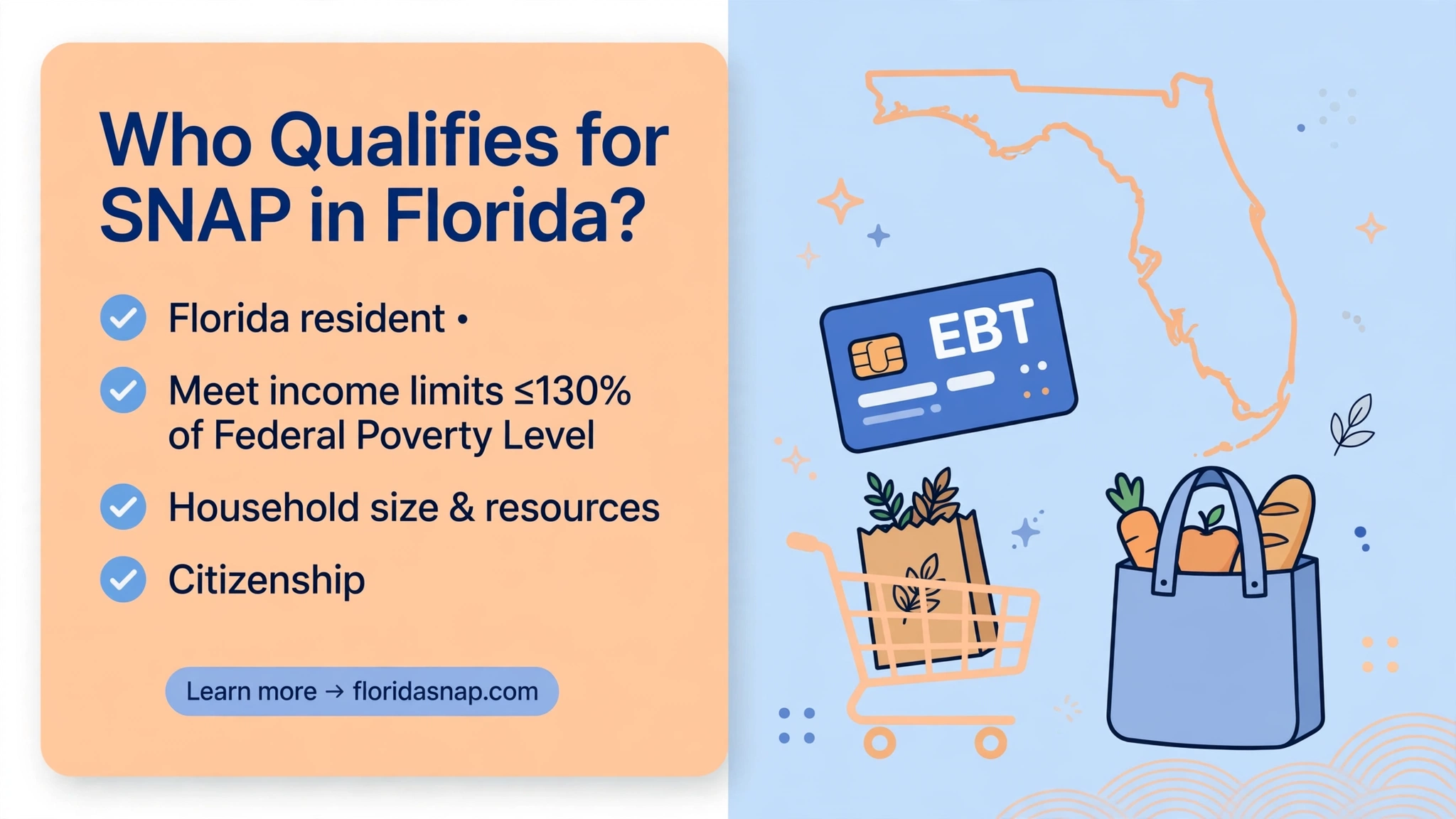
3. You Generally Need to Live in Florida
If you are applying for SNAP benefits through Florida, you generally need to be a Florida resident.
Residency is different from citizenship. A person can live in Florida and still need to meet other SNAP requirements before receiving benefits.
Applicants may be asked for information that helps verify their identity and circumstances. Make sure the information on your application is accurate and up to date.
If you recently moved to Florida, it is especially important to understand how your current household situation affects your application.
4. Citizenship or Qualified Immigration Status Can Matter
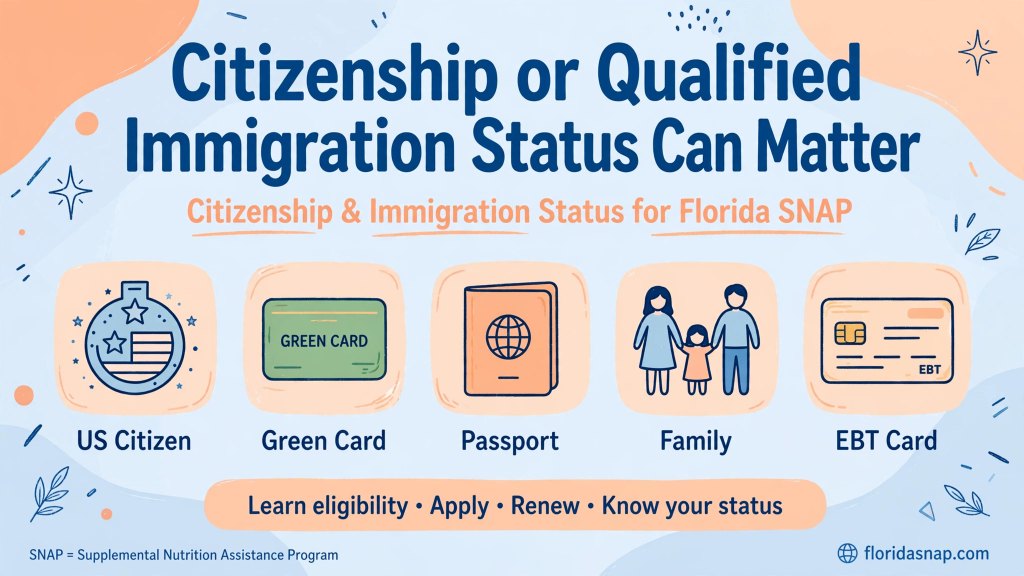
Another important part of SNAP eligibility in Florida is citizenship or immigration status.
U.S. citizens who meet the other program requirements may qualify for SNAP. Certain non-citizens may also qualify if they meet applicable immigration-status requirements.
Immigration rules can be complicated, and eligibility can differ between household members. For that reason, people should not assume that one person’s status automatically determines whether everyone in the household can receive assistance.
If your household includes both citizens and non-citizens, provide accurate information and check the current official rules that apply to your situation.
5. You May Need to Provide Social Security Information
Social Security information can be part of the SNAP application process.
Applicants should provide the information requested by the Florida benefits agency and make sure names, dates of birth, and other identifying information are accurate.
This information helps the agency review the application and determine whether household members meet program requirements.
If you are unsure about what information is required for a particular household member, check the official application instructions instead of guessing.
6. Work Requirements May Apply to Some Adults
Work-related rules can affect SNAP eligibility in Florida for certain adults.
Some SNAP recipients may need to meet work requirements or participate in approved employment or training activities. However, exemptions can apply in certain circumstances.
For example, rules may differ for people who are elderly, have qualifying disabilities, are caring for certain household members, or meet another exemption.
Because work rules can change and may depend on an individual’s circumstances, it is important to check the current requirements before assuming that you are either required or exempt.
If you are working part-time or looking for work, do not automatically assume that you cannot qualify for SNAP. Employment and SNAP eligibility can exist together when the household meets the applicable rules.
7. Certain Household Expenses May Affect the Calculation
SNAP eligibility is not always based simply on the amount of money your household earns.
Depending on your circumstances and the applicable rules, certain allowable deductions may affect the calculation. Expenses can include categories such as housing costs, utilities, dependent care, and other qualifying expenses.
This is important because two households with similar income may not necessarily have the same SNAP calculation.
When applying, provide accurate information about your household expenses. Do not leave out relevant costs simply because you are unsure whether they count. The agency can determine which expenses are allowable under the program rules.
8. Resource Rules May Apply Depending on Your Situation
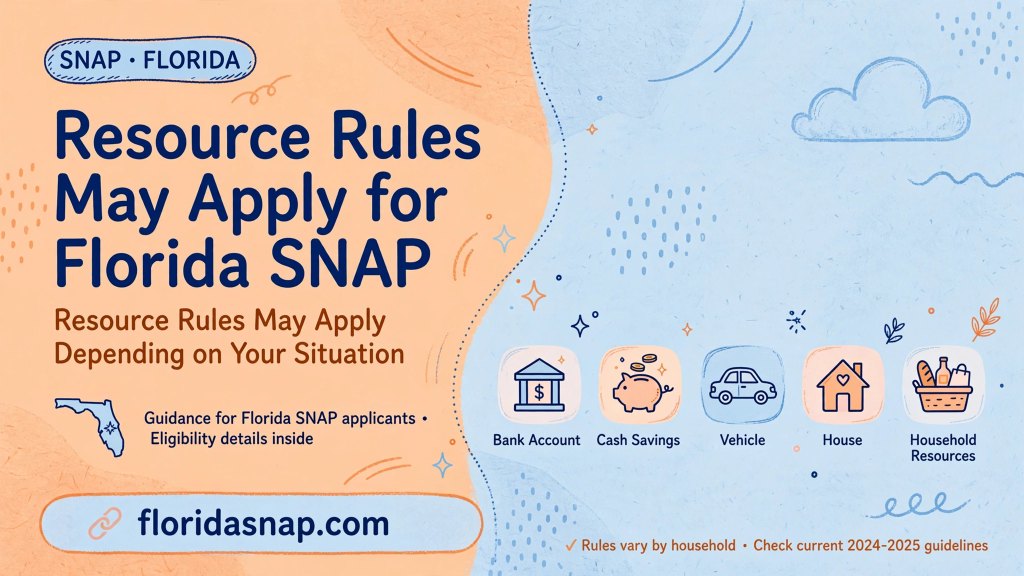
Resources and assets can also be relevant to SNAP eligibility in Florida, although the rules are not as simple as saying that everyone with money in a bank account is automatically disqualified.
SNAP has specific federal rules concerning resources, and some households may be subject to different treatment based on their circumstances.
For example, special rules can apply to households that include elderly or disabled members.
Do not make a decision based on a general statement you read on social media. Resource rules can be detailed, so check the current official requirements for your household.
9. You Need Accurate Documents and Information
Having the right information ready can make the application process easier.
Depending on your circumstances, you may need information related to:
- Your identity
- Household members
- Income
- Employment
- Housing costs
- Utility expenses
- Child or dependent-care costs
- Residency
- Immigration or citizenship status when applicable
- Other information requested by the agency
The exact documents required can vary. If the agency asks you to provide verification, respond as soon as possible.
Incorrect or incomplete information can create delays. Before submitting your application, take a few minutes to review the details and make sure everything is accurate.
10. You Must Complete the Application and Review Process
Meeting the basic requirements does not automatically mean that SNAP benefits will begin.
You still need to complete the application process. The state will review the information you provide and may ask for additional verification or an interview.
The best approach is to answer questions honestly and provide requested information within the required timeframe.
After the application is reviewed, you should receive an official decision. If you are approved, you can receive information about your benefits. If your application is denied, the notice should explain the decision and may provide information about your rights or next steps.
How to Check SNAP Eligibility in Florida Before Applying
If you want to understand your SNAP eligibility in Florida, start by looking at the current official Florida program information.
Before applying, consider these basic questions:
- How many people are in your SNAP household?
- What is your household’s current income?
- What are your major monthly expenses?
- Does anyone in the household have a qualifying disability or elderly status?
- Are there children or other dependents in the household?
- Does everyone meet the applicable citizenship or immigration requirements?
- Are there work requirements that apply to anyone in the household?
These questions can give you a general idea of the information you will need. However, they are not a substitute for an official eligibility determination.
What Happens After You Apply?
After you submit your application, the agency reviews the information you provided.
You may be contacted if additional information is needed. Depending on your situation, you may also need to complete an interview.
Keep an eye on official messages and requests. If the agency asks for documents or clarification, responding quickly can help prevent unnecessary delays.
The final decision depends on your household’s circumstances and the program rules that apply at the time of your application.
Common Reasons a SNAP Application May Not Be Approved
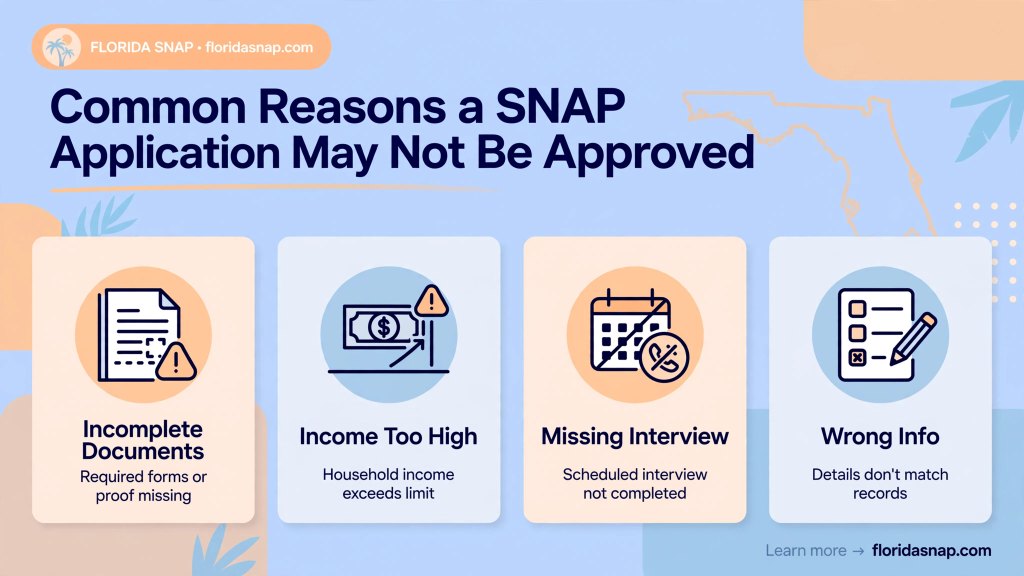
There are several reasons an application may not be approved.
For example, a household may have income above the applicable limit, fail to meet another eligibility requirement, provide incomplete information, or fail to submit requested verification.
A denial does not necessarily mean that you should never apply again. Household circumstances can change. If you disagree with a decision, review the official notice carefully to understand your options.
Frequently Asked Questions About SNAP Eligibility in Florida
What is SNAP eligibility in Florida?
SNAP eligibility in Florida refers to the rules used to determine whether a household can receive Supplemental Nutrition Assistance Program benefits in Florida. Income, household size, expenses, and other factors may be considered.
Can working people qualify for SNAP in Florida?
Yes, some working households can qualify. Having a job does not automatically mean that you cannot receive SNAP. The household must meet the applicable income and other requirements.
Does household size affect SNAP benefits?
Yes. Household size can affect both eligibility calculations and the amount of assistance a qualifying household may receive.
Can seniors qualify for SNAP?
Older adults may qualify if they meet the applicable program requirements. Special rules can apply to households that include elderly members.
Can non-citizens receive SNAP?
Some non-citizens may qualify under specific federal immigration-status rules. Eligibility depends on the person’s circumstances and applicable requirements.
Where can I apply for SNAP in Florida?
Florida residents should use the state’s official benefits resources to learn about the current application process, required information, and eligibility rules.
Final Thoughts
Understanding SNAP eligibility in Florida before applying can help you prepare for the process and avoid common mistakes. The 10 areas covered in this guide include income, household size, Florida residency, citizenship or qualified immigration status, Social Security information, work requirements, allowable expenses, resources, documentation, and the application process.
Remember that SNAP rules can change, and eligibility depends on your individual household circumstances. Use current official Florida information when checking requirements, and provide complete and accurate information when you apply.
You can check official requirements on ACCESS Florida and USDA SNAP.