Food Assistance Eligibility 2026: 9 Important Rules That Could Help You Qualify
Food can take up a large part of a family’s monthly budget. When grocery prices rise or household income falls, paying for everyday essentials can become difficult. Fortunately, several programs in the United States offer food assistance to eligible individuals and families who need help buying groceries and accessing nutritious meals.
However, many people are unsure whether they qualify, what documents they need, or how to start an application. Some people believe they cannot receive benefits because they have a job, own a car, or have a small amount of savings. In reality, eligibility depends on the program and the household’s specific circumstances.
Understanding food assistance eligibility in 2026 can help you identify available programs and learn which requirements may apply to your situation.
In this guide, we explain nine important rules, including income limits, household size, citizenship and immigration requirements, work rules, resources, special considerations for seniors and people with disabilities, and the application process.
Whether you are applying for the first time or checking your eligibility again, this article will help you understand your options.
What Is Food Assistance?
Food assistance refers to programs and services that help people obtain groceries, nutritious food, or prepared meals when they cannot easily afford them.
In the United States, the Supplemental Nutrition Assistance Program (SNAP) is one of the main federal food assistance programs. It helps eligible households purchase food through benefits provided on an Electronic Benefit Transfer (EBT) card.
SNAP is not the only option available. Depending on your circumstances, you may also qualify for programs that support pregnant women, young children, school students, or people experiencing an immediate food shortage.
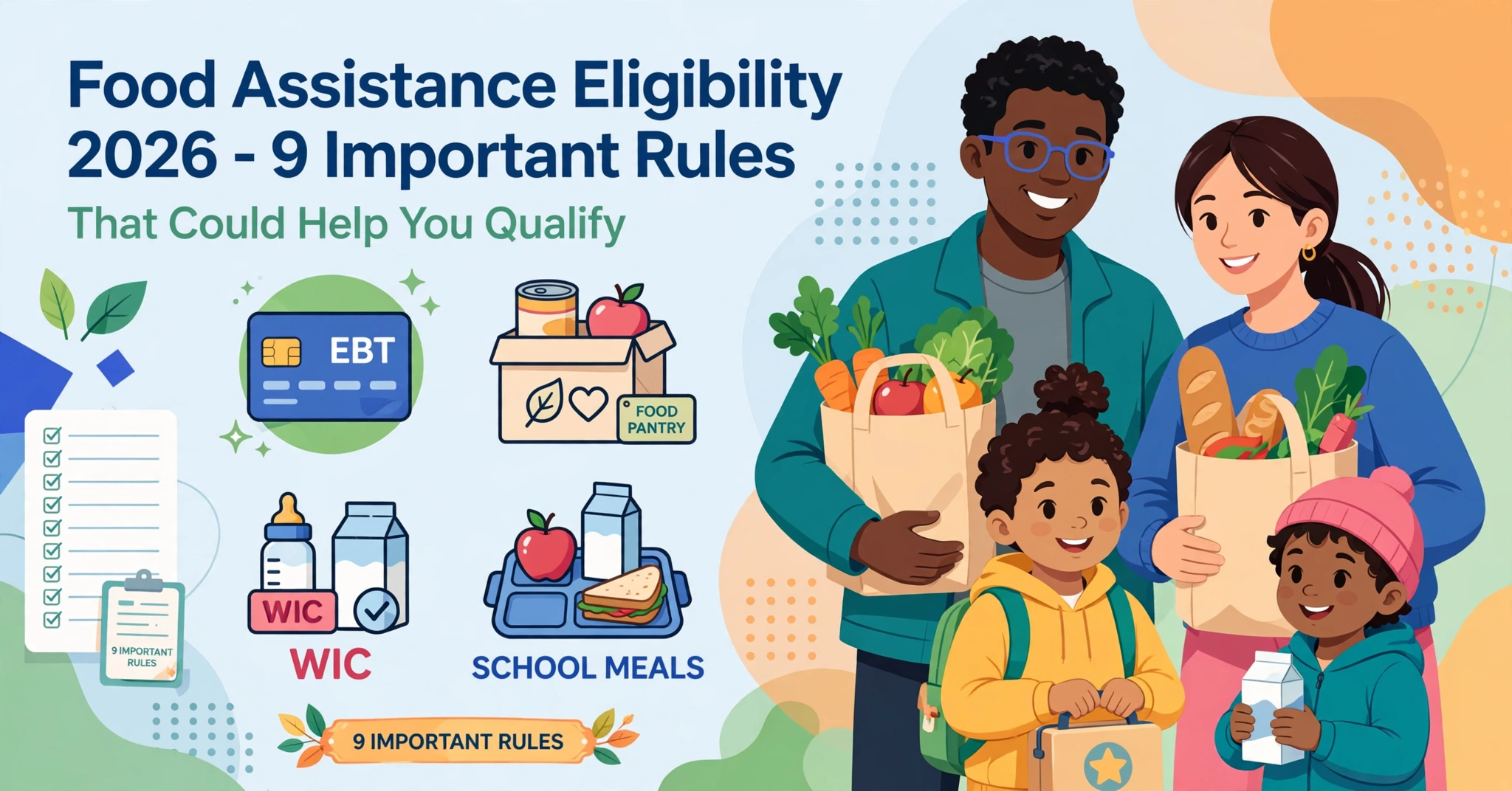
Common food assistance options include:
- SNAP: Helps eligible households pay for groceries.
- WIC: Provides eligible pregnant and postpartum women, infants, and young children with specific nutritious foods and nutrition support.
- School meal programs: Help eligible students receive meals at school.
- Local food banks and food pantries: Offer groceries or meals to people who need food support.
- Community meal programs: Provide meals through local organizations, charities, and community services.
Each program has its own requirements. Qualifying for one program does not automatically mean you qualify for every other program.
If you are looking for help with grocery costs, learning about food assistance eligibility is a useful first step.
1. Understand the Main Food Assistance Programs
Before applying, identify which food assistance program best matches your needs. Different programs serve different groups, so choosing the right option can save time and help you find suitable support.
Supplemental Nutrition Assistance Program (SNAP)
SNAP, commonly known as food stamps, helps eligible households buy food. Approved benefits are generally loaded onto an EBT card, which can be used at authorized retailers to purchase eligible food items.
SNAP is administered through state agencies under federal rules. As a result, application websites, procedures, and certain eligibility policies can differ from state to state.
The program is designed to help eligible households manage grocery expenses. However, it does not cover every household expense, and some products cannot be purchased with SNAP benefits.
Women, Infants, and Children (WIC)
WIC supports eligible pregnant, postpartum, and breastfeeding women, infants, and children younger than five who meet the program’s requirements.
The program provides specific nutritious foods, nutrition education, breastfeeding support, and referrals to other services.
WIC has its own eligibility criteria, including income and nutritional risk requirements. Its rules differ from SNAP requirements.
School Meal Programs
School meal programs help eligible children access meals during the school day. Depending on the school and program, meals may be free or offered at a reduced price.
Parents and guardians can contact their child’s school or local school district to learn about available meal programs and application procedures.
Local Food Banks and Pantries
Food banks and pantries can be helpful when a household needs groceries but does not currently receive government benefits.
Local organizations may have different requirements. Some distribute food to anyone in need, while others ask for basic information about household circumstances or service areas.
Helpful tip: If you need food quickly, do not assume you must wait for a SNAP decision before contacting a local food pantry.
2. Check Your Household Income
Income is one of the most important factors in determining food assistance eligibility. However, the rules are more detailed than simply looking at how much money you earn each month.
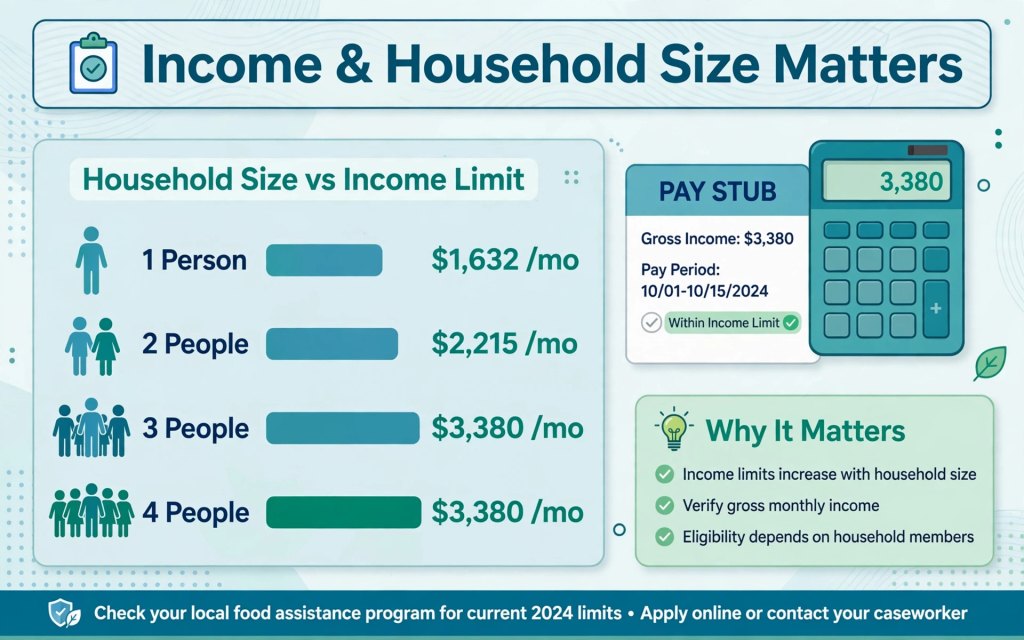
SNAP generally considers household income under applicable federal and state rules. Depending on the household and the policy in effect, an agency may evaluate gross income, net income, and certain allowable deductions.
What Is Gross Income?
Gross income generally means income before taxes and certain deductions. For a person who works for an employer, this usually refers to earnings before payroll deductions.
For self-employed individuals, income may be calculated under specific program rules.
What Is Net Income?
Net income for SNAP purposes is calculated after applicable deductions. It is not necessarily the same as the amount deposited into your bank account after taxes.
Certain households may qualify for deductions involving eligible housing expenses, dependent care, child support payments, or medical expenses for qualifying older adults and people with disabilities.
These deductions can affect the calculation used to determine eligibility and benefits.
Do Income Limits Change With Household Size?
Yes. Income limits and other financial rules often depend on the number of people in a SNAP household.
A household with several members may have different income limits from a household consisting of one person. The applicable rules can also depend on state policies and special household circumstances.
For this reason, avoid relying on an income limit published for a different state, household size, or benefit year.
What If You Have a Job?
Having a job does not automatically prevent you from receiving food assistance. Some working households qualify because their income is limited relative to their household circumstances and applicable program rules.
For example, a family with several members and significant eligible expenses may be assessed differently from a single-person household earning the same amount.
To check your potential eligibility, review the current requirements published by your state’s SNAP agency.
3. Know How Household Size Affects Eligibility
Household size can affect both eligibility and the amount of food assistance a household may receive.
For SNAP, household membership generally depends on who lives together and purchases and prepares food together. However, specific rules apply to spouses, children, and certain other household relationships.
This means that the number of people at one address does not always determine the SNAP household size.
Why Household Size Matters
Household size can affect income limits, deductions, and benefit calculations. When applying, you may need to provide information about the people who live with you and explain your food-purchasing arrangements.
Consider this example: two people live in one apartment, while a family of four lives in another home. Even if both households have the same total income, their circumstances may lead to different eligibility assessments.
The final decision depends on the applicable rules and the information submitted to the agency.
Report Your Household Information Accurately
When completing an application, provide accurate information about your household members. Do not leave out someone who must be included under the program rules, and do not automatically include everyone who shares your address.
If your living arrangements are complicated, contact your state agency and ask how household membership should be reported.
Accurate information helps the agency assess your application correctly and reduces the risk of delays.
4. Understand Citizenship and Immigration Requirements
Citizenship and immigration status can affect eligibility for SNAP and certain other food assistance programs.
U.S. citizens who meet the applicable requirements may qualify for SNAP. Some noncitizens may also qualify if they meet specific federal immigration-status requirements and other program rules.
However, eligibility does not apply equally to every immigration status.
What About Families With Different Immigration Statuses?
A household may include people with different citizenship or immigration statuses. One person’s ineligibility does not necessarily mean that every other household member is ineligible.
The agency must evaluate the application according to the rules that apply to each person and the household.
Applicants should provide accurate information and follow the agency’s instructions about any required documentation.
Where Can You Get Reliable Information?
Immigration-related eligibility requirements can be complicated. If you are uncertain about your circumstances, review current official SNAP guidance or contact your state benefits agency.
Avoid relying on social media posts or outdated articles that make broad claims about who can or cannot receive benefits.
Understanding the rules before applying can help you make informed decisions about your household’s options.
5. Learn About Food Assistance Work Requirements
Some SNAP applicants and recipients must meet work-related requirements. The specific requirements depend on federal law, state policies, and the individual’s circumstances.
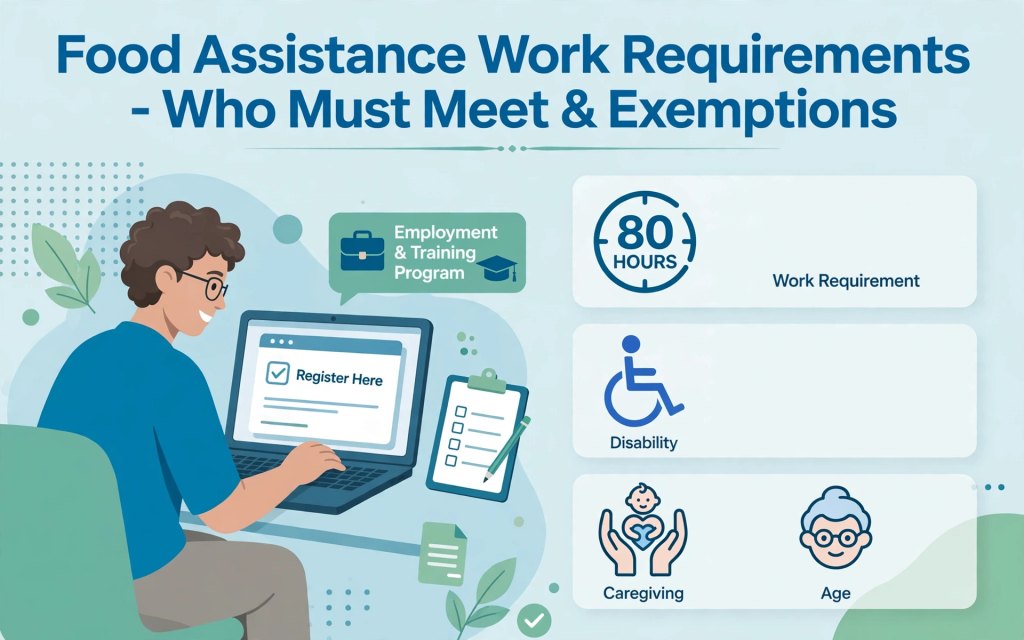
Work-related rules may include registering for work, participating in approved employment or training activities, or meeting applicable work-hour requirements.
Not every applicant is subject to the same rules.
Who May Be Affected?
Work requirements can depend on factors such as age, disability status, caregiving responsibilities, household composition, and other circumstances recognized under the applicable rules.
Certain people may qualify for exemptions. However, you should confirm whether an exemption applies to your situation instead of assuming that you are automatically exempt.
Why Should You Check Current Rules?
Work-related requirements can change because of changes in federal law, state implementation, and individual circumstances.
A rule described in an older article may no longer apply in the same way in 2026.
If you receive a notice from your benefits agency, read it carefully. Respond to requests for information and ask questions if you do not understand the requirements.
Failing to meet an applicable requirement without a recognized exemption may affect your benefits.
The best approach is to confirm the rules with your state’s SNAP agency before making decisions about your eligibility.
6. Review Your Resources and Assets
Income and assets are different things, and understanding the difference can help you evaluate your food assistance options.
Income is money received over time, such as wages. Resources or assets may include savings or certain property, depending on the program’s definitions.
SNAP resource rules can vary according to the applicable federal and state policies. Some states use policies that remove certain resource limits for many households, while different rules may apply in particular situations.
Does Having Savings Automatically Disqualify You?
Not necessarily. You should not assume that having money in a bank account automatically makes you ineligible for SNAP.
The rules applicable to your household determine whether resources must be considered and how they affect your application.
Similarly, owning a vehicle does not automatically mean that you cannot receive benefits. Vehicle-related rules and exemptions can depend on the circumstances and applicable state policy.
What Should Applicants Do?
Answer application questions honestly and provide the information requested by the benefits agency.
If you are unsure whether a particular resource must be reported, ask the agency for clarification. Do not rely on a general online statement that may not reflect your state’s current rules.
Checking the official requirements is especially important if your household has savings, property, or other financial resources.
7. Understand Special Rules for Seniors and People With Disabilities
Older adults and people with qualifying disabilities may be eligible for food assistance. Some SNAP rules and deductions can also be particularly relevant to these households.
However, age or disability alone does not guarantee approval. The agency must still assess the household under the rules that apply.
Medical Expense Deductions
Certain SNAP households may be able to deduct qualifying medical expenses when calculating net income.
Depending on the rules and circumstances, eligible expenses may include specific medical supplies, health-related costs, and other recognized expenses.
Keep receipts, statements, and other supporting records for expenses you believe may qualify. Ask the agency which costs can be counted and what documentation is needed.
Housing and Other Expenses
Allowable housing expenses and other deductions may also affect the benefit calculation.
The treatment of these expenses depends on the applicable rules and household circumstances. Not every bill automatically qualifies for a deduction.
Get Help With the Application
If you are an older adult or have a disability and find the application process difficult, ask your state agency about available assistance.
Community organizations and local aging-service providers may also be able to help you understand the process.
Reviewing the rules carefully can help you identify deductions and requirements that you might otherwise overlook.
8. Prepare the Documents Needed for Food Assistance
Preparing your information before applying can make the process easier. The exact documents required depend on your state, household circumstances, and the information the agency needs to verify.
Commonly requested information may include:
- Identification and contact details.
- Names and information about household members.
- Recent pay stubs or other evidence of income.
- Information about rent, mortgage payments, and utilities.
- Details of qualifying medical or dependent-care expenses, when relevant.
- Additional documents requested by the state agency.
Not every applicant will need every document on this list.
Why Is Accurate Information Important?
The agency may need to verify information before making an eligibility decision. Missing documents or unanswered questions can delay the process.
Before submitting your application, review your answers and make sure the information is accurate.
If you cannot obtain a particular document, contact the agency and ask whether another form of verification is acceptable.
Keep Copies of Important Information
Keep copies of your application, submitted documents, confirmation messages, and letters from the agency whenever possible.
These records can help you respond to follow-up questions or check the status of your application.
Most importantly, follow the instructions provided by your state’s benefits agency rather than assuming that every state uses the same document checklist.
9. Apply for Food Assistance and Track Your Application
After reviewing the eligibility requirements and preparing your information, the next step is to apply through the appropriate agency.
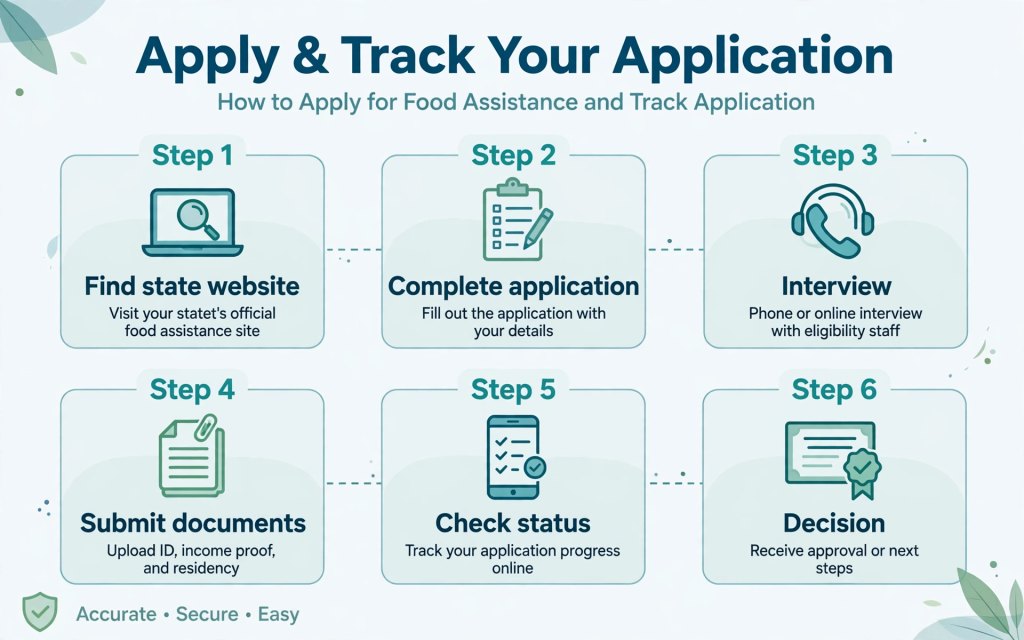
SNAP is administered by state agencies, so the application process varies by location.
Step 1: Find Your Official State Website
Start by locating your state’s official SNAP application page.
You can use the federal government’s Food and Nutrition Service website to learn about SNAP and find information about state agencies.
Be careful with websites that charge unnecessary fees or promise guaranteed approval. Use official government resources whenever possible.
Step 2: Complete Your Application
Provide the requested information about your household, income, expenses, and other relevant circumstances.
Answer every question accurately. If you do not understand a question, contact the agency rather than guessing.
Many states offer online applications, while other application methods may also be available.
Step 3: Complete an Interview if Required
The agency may need to conduct an interview to clarify your information or ask additional questions.
Follow the instructions in any notice you receive and make sure the agency has current contact information for you.
Step 4: Submit Requested Documents
Provide the supporting documents requested by the agency and meet the applicable deadlines.
If you need more information about a document request, contact the agency as soon as possible.
Step 5: Check Your Application Status
Use your state’s official online account or contact the relevant agency to check progress.
Keep track of notices, requests for information, and any deadlines listed in official communications.
Step 6: Understand the Decision
Regular SNAP applications are generally processed within 30 days. Some households experiencing severe financial need may qualify for expedited service, often within seven days, if they meet the applicable criteria.
If approved, read your notice to understand your benefit amount and when benefits will be available.
If your application is denied, review the reason carefully. You may have the right to request a fair hearing or appeal within a specified period. Follow the instructions and deadlines in your notice.
If you still need food while waiting for a decision, consider contacting a local food pantry or community food program.
Frequently Asked Questions About Food Assistance Eligibility in 2026
1. Who qualifies for food assistance in 2026?
Eligibility depends on the program and your circumstances. For SNAP, factors may include household size, income, allowable deductions, immigration-related rules, and applicable work requirements.
The most reliable way to determine whether you qualify is to review your state’s current requirements or submit an application.
2. What is the income limit for food assistance?
There is no single income limit that applies to every food assistance program and household.
SNAP income rules depend on household size, applicable federal requirements, and state policies. Certain households may also qualify for deductions that affect their eligibility or benefit calculation.
Check the current rules for your state rather than relying on an outdated income chart.
3. Can I receive food assistance if I have a job?
Yes. Having a job does not automatically disqualify you from SNAP.
Your income, household size, expenses, and other applicable requirements help determine eligibility. Some applicants may also be subject to work-related rules.
4. Can seniors receive food assistance?
Yes. Older adults may qualify for SNAP if they meet the applicable eligibility requirements.
Certain households may also qualify for special deductions, including deductions for eligible medical expenses.
5. How long does food assistance approval take?
Regular SNAP applications are generally processed within 30 days. Households that meet the requirements for expedited service may receive benefits sooner, often within seven days.
Processing times and application procedures should be confirmed with the relevant state agency.
6. Can I apply for food assistance online?
Many states provide online SNAP applications through official government websites.
Depending on your state, you may also be able to apply by mail, in person, or through another approved method.
7. What happens if my food assistance application is denied?
Read your denial notice to understand why the agency rejected your application.
If you believe the decision is incorrect, you may be able to request a fair hearing or appeal within the applicable deadline. The notice should explain the available options and how to proceed.
8. Can I get food assistance while waiting for my application decision?
You can contact local food banks, food pantries, and community meal programs while waiting. These organizations may provide short-term support, although their service areas and requirements vary.
You can also ask your state agency whether you qualify for expedited SNAP processing.
Conclusion: Check Your Food Assistance Eligibility Today
Understanding food assistance eligibility in 2026 can help you make informed decisions about grocery support and other available resources.
As this guide explains, eligibility is not determined by income alone. Household size, applicable work requirements, citizenship or immigration rules, resources, allowable deductions, and other circumstances may all play a role.
Start by identifying the program that best matches your needs. Review the current requirements, gather the information you need, and apply through your state’s official benefits agency if you believe you may qualify.
If SNAP is not the right option for your circumstances, explore other resources, including WIC, school meal programs, local food banks, and community organizations.
Food assistance can provide valuable support during difficult financial periods. Taking the time to understand your options is a practical first step toward finding help for yourself and your family.
Disclaimer: This article provides general educational information, not a guarantee of eligibility or legal advice. Food assistance requirements can change, and individual decisions are made by the relevant program agency. Always verify current rules through official government sources.