Florida Medicaid Application 2026: 7 Easy Steps to Apply for Benefits with Confidence
Applying for health coverage can feel confusing, especially when you are unsure about eligibility, required documents, or how to check your application status. If you live in Florida and need help understanding your healthcare options, learning how the Florida Medicaid application process works can make the experience much easier.
Florida Medicaid provides healthcare coverage to eligible individuals and families who meet the requirements of specific Medicaid programs. Depending on your circumstances, coverage may be available for children, pregnant women, certain parents and caretaker relatives, older adults, and people with qualifying disabilities or long-term care needs.
However, not everyone qualifies under the same rules. Income, household circumstances, age, residency, disability status, and other factors may affect eligibility.
The good news is that you can take several practical steps to prepare your application, provide accurate information, and keep track of your progress.
In this guide, you will learn how to apply for Florida Medicaid in 2026, which documents you may need, how to check your application status, what happens after approval, and what to do if your application is denied.
What Is a Florida Medicaid Application?
A Florida Medicaid application is a request for healthcare coverage through Florida’s Medicaid program. Medicaid is a public health coverage program funded jointly by the federal government and the states.
Florida Medicaid helps eligible people access covered medical services according to the rules of their particular program. Depending on the coverage category, benefits may include doctor visits, hospital services, prescription medications, preventive care, and other medically necessary services.
The exact benefits available depend on the individual’s eligibility category and coverage arrangements.
Two important government agencies help manage Florida’s Medicaid system.
The Florida Department of Children and Families (DCF) handles many Medicaid eligibility applications. The Florida Agency for Health Care Administration (AHCA) administers Florida’s Medicaid program, including important aspects of healthcare coverage and service delivery.
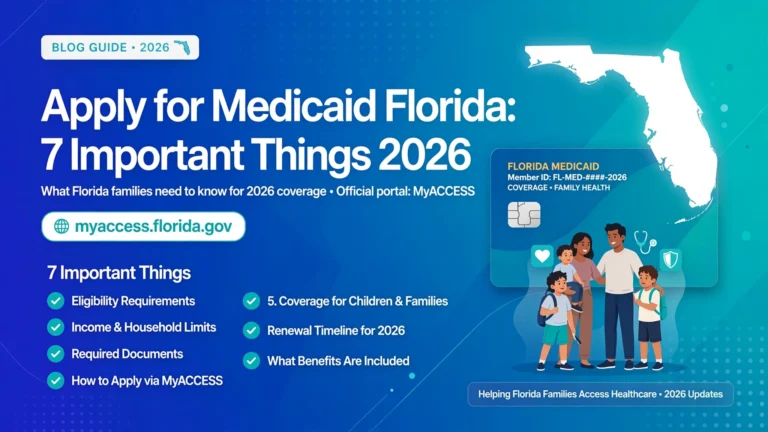
Applicants can use the official MyACCESS Florida website to access available application and benefits services.
It is important to understand that submitting an application does not automatically mean you will receive Medicaid. The state must review your information and determine whether you meet the requirements for the program you are applying for.
Who Is Eligible for Florida Medicaid in 2026?
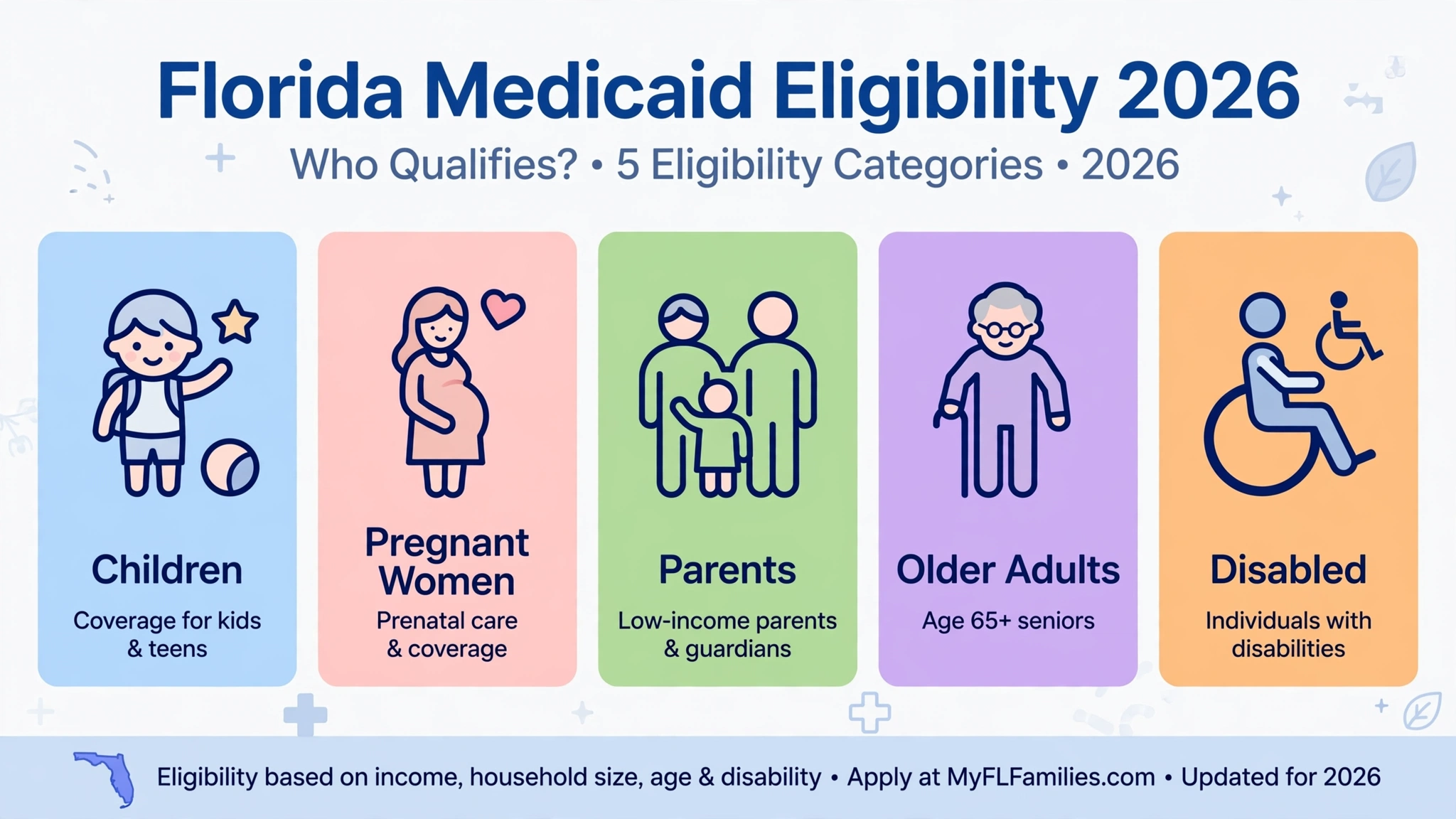
Before starting a Florida Medicaid application, it helps to understand which eligibility category may apply to you.
Florida Medicaid has different pathways for different groups. The requirements for a child may differ significantly from those for an older adult or someone applying for long-term care services.
1. Children
Children may qualify for Medicaid if they meet the applicable age, household, income, residency, and other requirements.
Florida also offers children’s health coverage through programs such as Florida KidCare, which includes different coverage options for eligible children.
Parents should review the available programs carefully because a child who does not qualify for one type of coverage may have another option.
2. Pregnant Women
Pregnant women may qualify for Medicaid if they meet the relevant eligibility requirements.
Pregnancy-related coverage can help eligible applicants access prenatal care and other covered medical services. Because pregnancy-related eligibility rules may differ from other Medicaid categories, applicants should check the specific requirements that apply to them.
If you are pregnant and need healthcare coverage, consider applying promptly and reviewing official instructions about when coverage may begin.
3. Parents and Caretaker Relatives
Certain parents and relatives caring for dependent children may qualify for Florida Medicaid.
Eligibility depends on the applicable program rules, including financial and household requirements. Not every parent with a low income will qualify.
If you care for a child and need health coverage, check your eligibility rather than assuming that you automatically qualify or do not qualify.
4. Older Adults
People aged 65 and older may qualify through certain Medicaid categories, depending on their financial circumstances and other requirements.
Some older adults may also need to explore programs related to long-term care or assistance with healthcare expenses.
These categories can involve additional financial assessments and documentation. Applicants should review the relevant requirements before submitting their information.
5. People With Disabilities
People with qualifying disabilities may have access to Medicaid through particular eligibility pathways.
The rules can depend on factors such as income, resources, disability-related requirements, and the type of coverage requested.
Some applicants may need to provide additional medical information or complete an assessment. The documents required will depend on their circumstances.
An Important Note About Florida Medicaid Eligibility
Florida has not adopted broad Medicaid expansion for all low-income adults. As a result, an adult without dependent children may not qualify based on low income alone.
This is why it is important to identify the correct eligibility category before completing a Florida Medicaid application.
For the most accurate information, review the official Florida Department of Children and Families website and the Florida Agency for Health Care Administration website.
Florida Medicaid Application 2026: 7 Easy Steps to Apply
Now that you understand the basic eligibility categories, let’s look at the application process.
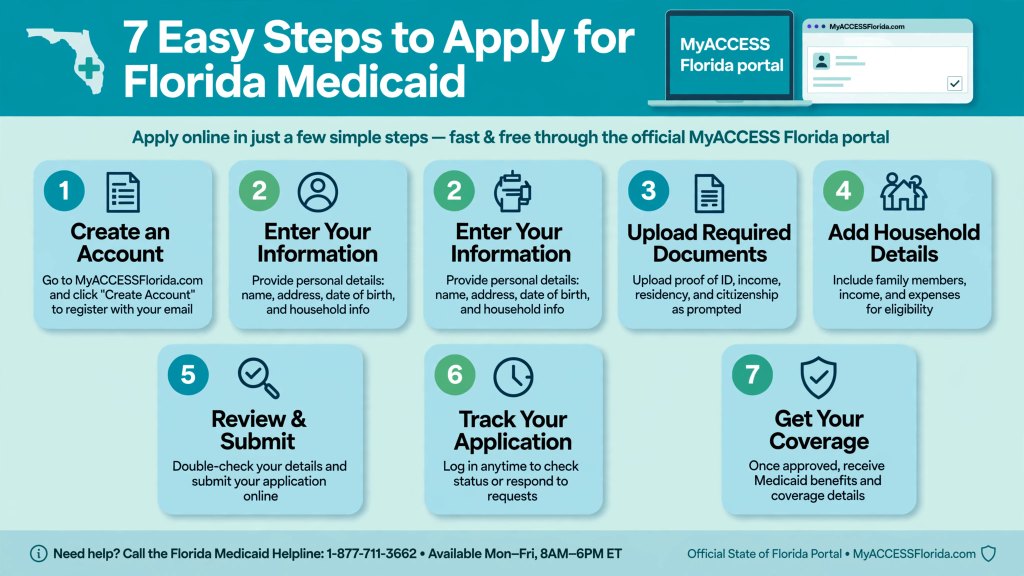
Following these seven steps can help you prepare your information, avoid common mistakes, and understand what happens after you submit your application.
Step 1: Check Your Florida Medicaid Eligibility
The first step is to determine which Medicaid category may apply to you.
Before beginning your Florida Medicaid application, consider your age, household circumstances, income, residency, and whether you are applying because of pregnancy, disability, or long-term care needs.
Different categories may use different financial rules. Some eligibility pathways consider household income, while others may also assess resources or apply additional requirements.
For example, a child may qualify under different financial rules from an older adult applying for a Medicaid program involving long-term care.
Do not rely on a general income figure found on an unrelated website. A number that applies to one group may not apply to another.
Instead, check the current official eligibility information for your particular situation.
Why Checking Eligibility Matters
Reviewing eligibility requirements can help you understand which application pathway to follow and what information you may need.
However, an online estimate or preliminary eligibility check is not a final decision. Only the appropriate agency can determine whether you qualify after reviewing your circumstances.
If you are uncertain about your eligibility, you can still review the official application instructions or contact the relevant agency for guidance.
Step 2: Gather the Documents You May Need
Preparing your documents before starting can make the Florida Medicaid application process more manageable.
You may need to provide information about yourself, your household, your income, and other circumstances relevant to your application.
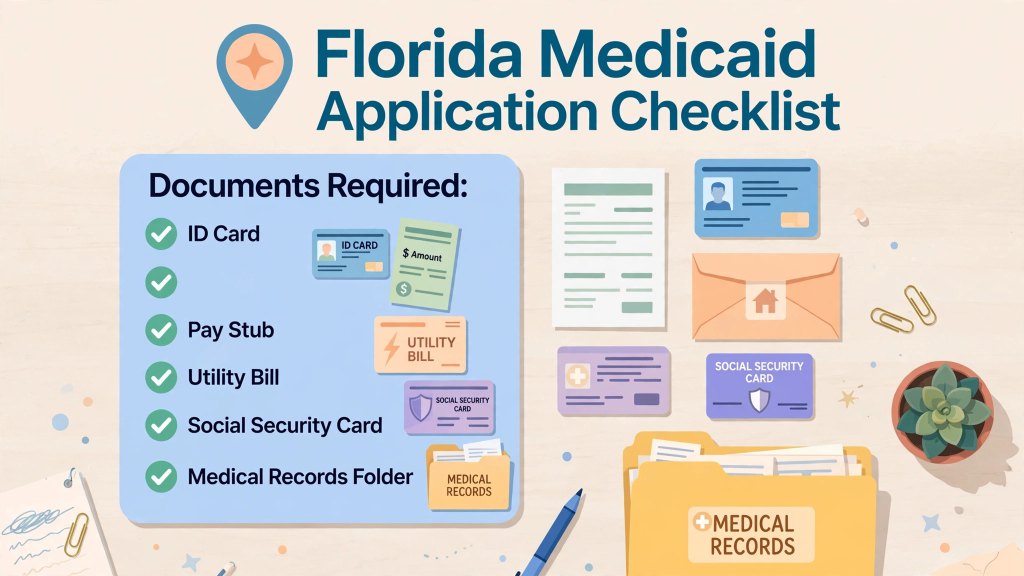
Depending on the eligibility category, the requested information may include:
- Personal identification information.
- Names and details of household members.
- Income and employment information, when required.
- Florida residency information.
- Social Security numbers, when applicable or requested.
- Citizenship or immigration documentation, when relevant.
- Information about existing health insurance.
- Disability-related or medical records, when required for a particular category.
- Financial or resource information for programs that assess those factors.
Not every applicant needs every document on this list. The agency may also be able to verify certain information electronically.
How to Prepare Your Documents
First, read the application instructions carefully. Make a list of the information you already have and identify anything you may need to obtain.
Next, check that the details you enter are accurate and consistent with the supporting documents.
If you are asked to upload files, make sure they are readable and include all requested pages. Keep copies of your submitted information when possible.
Never send sensitive documents to an unfamiliar website or an unverified person who claims to provide Medicaid assistance.
Helpful tip: Follow the specific document request you receive from the agency. Sending unrelated paperwork may not help your application and could create unnecessary confusion.
Step 3: Visit the Official MyACCESS Florida Website
One of the easiest ways to begin is through the official MyACCESS Florida portal.
Visit:
https://myaccess.myflfamilies.com
This is Florida’s official online portal for accessing available public assistance application and account services.
Once you reach the website, follow the instructions for starting a new application or accessing an existing account.
What Should You Do on the Website?
Read the available instructions and identify the appropriate application option for your circumstances.
You may be asked to provide personal details, household information, income information, and other details needed to evaluate eligibility.
If you already have an account, use the appropriate sign-in process rather than creating unnecessary duplicate accounts.
After submitting your application, you may also be able to use your account to review available notices, check updates, or respond to requests for additional information.
The exact features available may depend on your application and account.
Stay Safe While Applying Online
Before entering personal information, confirm that you are using the official website.
Avoid advertisements or unfamiliar websites that promise guaranteed approval, immediate benefits, or special access to government services.
You should not have to pay an unknown person simply to access the official application portal.
If you need help, use the official agency’s published contact information.
Step 4: Complete the Florida Medicaid Application Carefully
After accessing the application system, you will need to provide the information requested.
Depending on your circumstances, the form may ask about your identity, household members, income, residency, insurance coverage, and other eligibility-related details.
Take your time and read each question carefully.
Provide Accurate Information
Make sure the information you enter reflects your actual circumstances.
For example, review names, dates, addresses, household details, and income information before moving to the next section.
If a question is unclear, read the instructions or contact the appropriate agency for help rather than guessing.
Incorrect or incomplete information can lead to requests for clarification and may delay a decision.
Review Your Answers Before Submitting
Before completing the application, review the information you have entered.
Check that required questions have been answered and that the information matches your supporting documents.
If the application allows you to save your progress, use that feature when necessary.
Remember that you are responsible for providing truthful and complete information. Do not leave out relevant details simply because you think they may affect eligibility.
A complete and accurate application helps the agency evaluate your circumstances correctly.
Step 5: Submit Your Application and Save the Confirmation
Once you have completed the required sections, follow the website’s instructions to submit your application.
Before submitting, make one final review of your answers and any documents you were instructed to provide.
After submission, save the confirmation information or reference number if one is provided.
You may also want to record the submission date and keep copies of relevant documents.
What Happens After Submission?
The agency will review your application and determine whether additional information is needed.
Depending on your circumstances, you may receive notices requesting verification or clarification.
You should not assume that your application has been approved simply because you reached the submission confirmation screen.
Instead, monitor your account and any official correspondence for updates.
Can You Apply Without Using the Website?
Online applications are one option, but other official application methods may be available depending on your circumstances.
If you cannot apply online, check the Florida DCF website for current instructions about alternative application methods.
Always follow official directions to make sure your application reaches the correct agency.
Step 6: Respond to Requests for Additional Information
After reviewing your Florida Medicaid application, the agency may ask you to provide more information.
This does not necessarily mean that your application has been denied. The agency may simply need additional details to determine whether you meet the requirements.
For example, you might be asked to verify income, clarify household information, or provide documents related to your eligibility category.
Read Every Notice Carefully
When you receive a request, read it from beginning to end.
Identify which documents or details are required, how they should be submitted, and the deadline listed in the notice.
If you do not understand a request, contact the agency through its official channels.
Submit the Requested Information on Time
Follow the instructions provided with the request. If online submission is available for your case, use the appropriate account features.
Make sure uploaded documents are readable and include all requested information.
Keep a copy of what you submit and any available confirmation.
If you cannot obtain a document before the deadline, contact the agency as soon as possible to ask what options are available.
Responding promptly can help avoid unnecessary delays, although it does not guarantee approval.
Step 7: Check Your Florida Medicaid Application Status
After submitting your application, you will probably want to know whether it has been reviewed or approved.
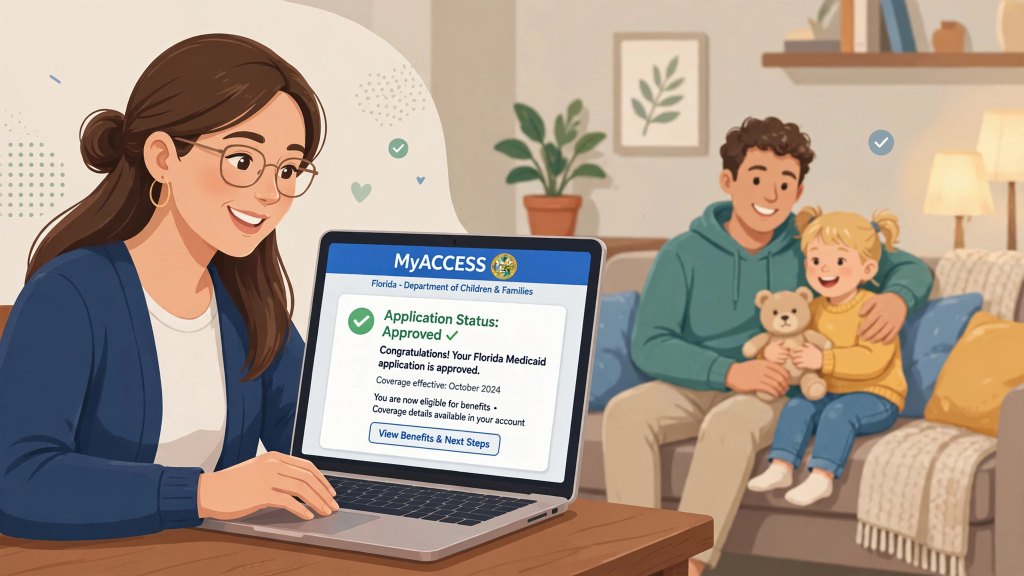
You can use the official MyACCESS Florida portal to access available application and benefits information.
How to Check Your Application Status
Follow these general steps:
- Visit the official MyACCESS Florida website.
- Sign in to your account using the appropriate credentials.
- Open the available application or case information.
- Review any updates, notices, or outstanding document requests.
- Follow the instructions provided by the agency.
- Contact Florida DCF if you need clarification about your application.
The exact screens and options may change over time, so follow the instructions currently displayed on the official website.
What If Your Application Is Still Pending?
A pending status does not necessarily mean that something is wrong.
The agency may still be reviewing your information, verifying eligibility, or waiting for additional documents.
Check whether the agency has requested anything from you. If there is an outstanding request, follow the instructions and stated deadline.
If you have waited longer than expected and cannot find an explanation, contact the agency for an update.
Avoid submitting duplicate applications without first understanding the status of your existing application.
What Documents Are Needed for a Florida Medicaid Application?
The documents needed for a Florida Medicaid application depend on the type of coverage you are requesting and your personal circumstances.
Some applicants may need only basic information, while others may be required to provide more detailed financial, medical, or household documentation.
Here is a general overview.
Personal and Household Information
You may need to provide information about your identity, address, household members, and other details requested by the application.
Make sure this information is accurate and up to date.
Income Information
Depending on the eligibility category, you may be asked to provide information about employment, wages, or other income.
Follow the instructions to determine which records are acceptable.
Residency and Citizenship or Immigration Information
Some applicants may need to provide information to establish Florida residency or satisfy applicable citizenship or immigration-related requirements.
The exact documentation depends on the circumstances and program rules.
Applicants seeking coverage through certain disability-related or long-term care pathways may need to provide additional records or complete an assessment.
Follow the agency’s instructions for the specific category.
Existing Health Insurance
The application may ask whether you currently have other health coverage.
Provide accurate information so the agency can evaluate your circumstances under the applicable rules.
The best approach is to use the official document checklist or respond to the specific verification request provided for your application.
How Long Does Florida Medicaid Application Processing Take?
One common question is how long it takes to receive a decision after submitting a Florida Medicaid application.
There is no single processing time that applies to every applicant and every eligibility category.
The timeline can depend on the type of coverage requested, the completeness of the application, verification requirements, and whether additional information is needed.
Reasons an Application May Take Longer
Several issues can affect processing:
- Missing or incomplete information.
- Documents that require clarification.
- Income or household details that need verification.
- Additional eligibility assessments.
- Outstanding requests that have not been answered.
- Administrative processing delays.
These factors do not automatically mean that an application will be denied.
How to Avoid Unnecessary Delays
Complete the application carefully, provide the requested information, and check your account regularly.
Respond to official notices by their stated deadlines.
If the agency requests a document you do not have, contact it to ask what alternatives may be acceptable.
For current processing guidance, consult the official Florida DCF website rather than relying on outdated timelines published elsewhere.
What Happens After Your Florida Medicaid Application Is Approved?
Receiving an approval decision is an important step, but you should still review the details carefully.
The approval notice should explain the determination and provide relevant information about coverage.
Review Your Approval Notice
Check which individuals have been approved and read the information about the coverage effective date.
Do not assume that every household member has been approved simply because one person qualifies.
If something appears incorrect, contact the agency for clarification.
Understand Your Coverage
Your benefits and covered services depend on the Medicaid category and applicable program rules.
Read the information provided about accessing healthcare services, obtaining prescriptions, and receiving other covered care.
Some beneficiaries may need to select a Medicaid managed-care plan or follow other enrollment instructions.
Follow the official directions provided for your case.
Keep Your Information Updated
After approval, continue to read official notices and report changes when required.
Changes in household circumstances, income, address, or other relevant details may affect your benefits.
Keeping your contact information current can also help you receive important notices and renewal reminders.
What If Your Florida Medicaid Application Is Denied?
A denial can be frustrating, especially when you need healthcare coverage. However, it is important to understand the reason before deciding what to do next.
Read the Denial Notice
The notice should explain the decision and provide information about any available review or appeal rights.
Read it carefully and identify the reason your application was denied.
For example, the decision may relate to eligibility requirements, missing verification, or information that did not meet the program’s rules.
Check Whether Information Is Missing or Incorrect
Review the details you provided.
If you believe information was misunderstood or an important document was missing, contact the agency to ask how the issue can be addressed.
Do not assume that sending additional documents automatically reverses a final decision.
Understand Your Appeal Rights
Depending on the decision, you may have the right to request a review or fair hearing.
Your notice should explain the applicable process and deadlines.
Follow those instructions carefully. If you need help understanding your options, consider contacting a qualified benefits counselor or legal aid organization.
Consider Whether Reapplying Is Appropriate
In some circumstances, a new application may make sense, such as when your circumstances change or a previous problem has been resolved.
However, if you disagree with a decision, review your appeal rights before choosing to reapply. The appropriate option depends on your specific situation.
Seven Common Florida Medicaid Application Mistakes to Avoid
Even a straightforward application can become more difficult when important details are overlooked.
Here are seven mistakes to avoid.
1. Providing Incomplete Information
Leaving required sections blank can result in requests for additional details.
Read the questions carefully and complete all required fields.
2. Entering Incorrect Income Details
Provide accurate information and follow the instructions about which income sources or records must be reported.
Do not rely on guesses when exact information is available.
3. Uploading Unclear Documents
If documents are requested, make sure the information is readable and all required pages are included.
Follow the file and submission instructions shown in your account.
4. Ignoring Official Notices
A notice may contain an important request, deadline, or decision.
Check your account and correspondence regularly so you do not miss information relevant to your application.
5. Missing a Submission Deadline
Respond to requests by the deadline provided.
If you are unable to meet a deadline, contact the agency promptly to ask what options are available.
6. Using Unofficial Websites
Protect your personal information by using official government websites.
Be cautious of websites that promise guaranteed Medicaid approval or charge unnecessary fees for access to government services.
7. Assuming That Submission Means Approval
Submitting an application is only one stage of the process.
Wait for the official determination and carefully review any information about coverage and next steps.
Frequently Asked Questions About Florida Medicaid Application 2026
1. How Do I Apply for Florida Medicaid in 2026?
You can begin by visiting the official MyACCESS Florida website. Follow the instructions to access the application process, provide the requested information, and submit any required documents.
Other official application methods may be available depending on your circumstances.
2. Can I Apply for Florida Medicaid Online?
Yes. MyACCESS Florida provides online access to available application and benefits services.
Make sure you use the official website when entering personal or financial information.
3. Is There an Income Limit for Florida Medicaid?
Income requirements depend on the eligibility category and applicable program rules.
Children, pregnant women, parents, older adults, and people applying through disability-related pathways may be subject to different requirements.
Some categories also consider resources or other financial circumstances. Check the current rules for your particular situation.
4. How Can I Check My Florida Medicaid Application Status?
Sign in to the official MyACCESS Florida portal and review the application or case information available to you.
Check for updates, notices, and requests for additional information. Contact Florida DCF if you cannot understand the status or need further assistance.
5. Can I Apply for Medicaid if I Already Have Health Insurance?
Having other health insurance does not automatically answer whether you qualify for Medicaid.
Eligibility depends on the program category and applicable rules. Answer questions about existing coverage accurately and follow the instructions provided by the agency.
6. What Should I Do if My Application Is Pending?
Review your account and official notices to see whether any information is missing.
If you have already provided everything requested, the agency may still be processing your application. Contact the appropriate agency if you need an update or explanation.
7. Can I Reapply if My Florida Medicaid Application Is Denied?
Your options depend on the reason for denial.
You may need to correct missing information, request a review or hearing, or consider a new florida medicaid application if your circumstances change. Check the denial notice for instructions and deadlines.
8. Where Can I Get Help With My Florida Medicaid Application?
For eligibility and application assistance, visit the Florida Department of Children and Families.
For information about the Medicaid program, coverage, and administration, visit the Florida Agency for Health Care Administration.
Conclusion
Completing a Florida Medicaid application in 2026 can feel overwhelming at first, but understanding the process makes it easier to take the next step.
Start by checking your eligibility category, gathering the necessary information, and visiting the official MyACCESS Florida website. Complete the application carefully, save your confirmation details, respond to requests for additional information, and check your application status regularly.
If your application is approved, review your coverage information and follow any instructions about accessing benefits. If it is denied, read the notice carefully and understand your available options.
Most importantly, use official government resources to confirm current eligibility requirements and application instructions. Every applicant’s circumstances are different, and submitting an application does not guarantee approval.
With accurate information and careful preparation, you can approach the Florida Medicaid application process with greater confidence and a clearer understanding of what to expect next.