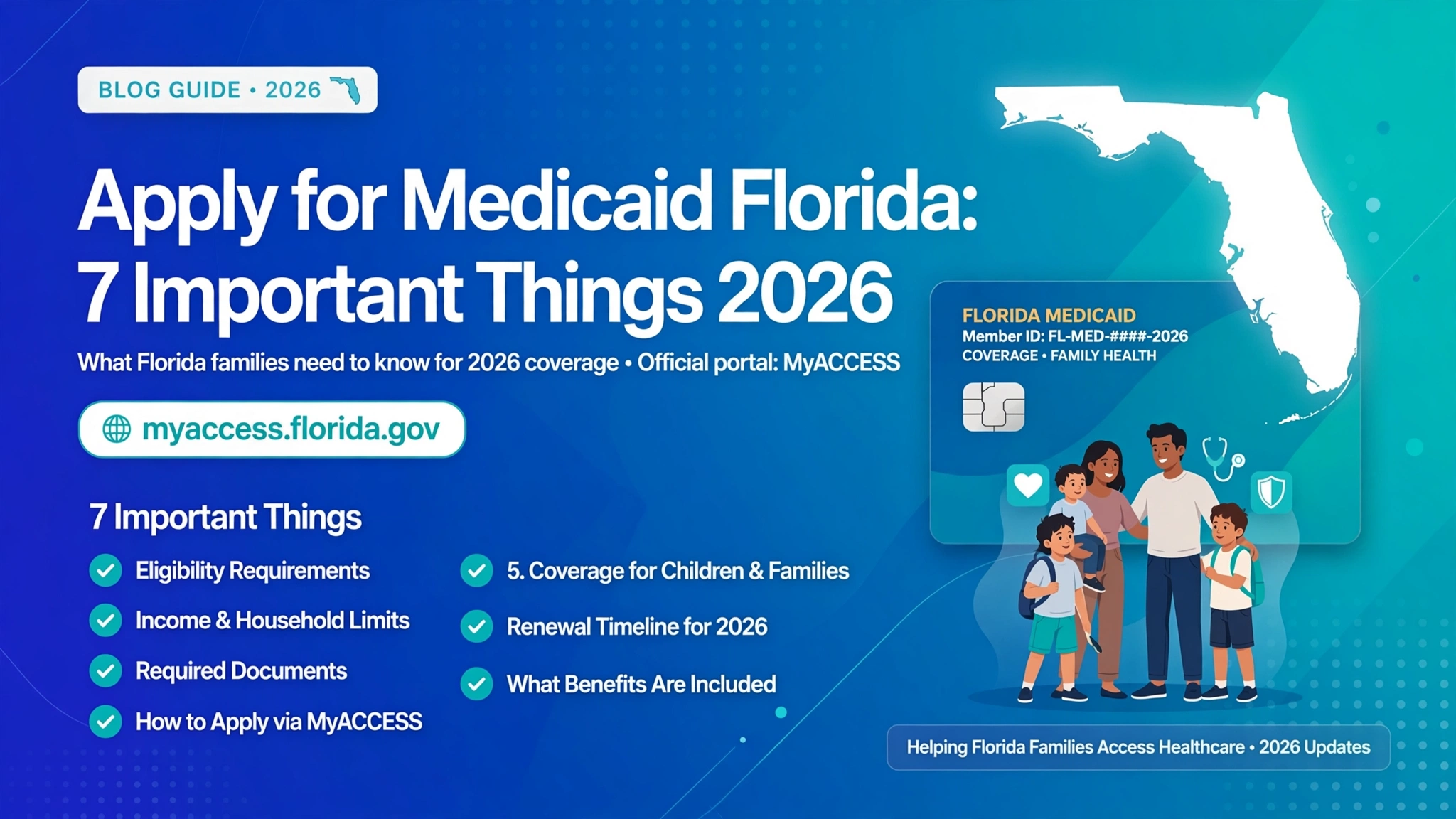
Apply for Medicaid Florida: 7 Important Things You Need to Know Before Applying
If you need affordable healthcare, understanding how to apply for Medicaid Florida can help you take the next step toward getting medical coverage. Florida Medicaid is a government health coverage program that helps eligible individuals and families access covered medical services. However, not everyone qualifies under the same rules, so it is important to understand the requirements before submitting an application.
Many people have questions about Florida Medicaid eligibility, income limits, required documents, and the online application process. First-time applicants may also wonder how to check their application status or what to do if the state requests additional information.
The good news is that you can begin by reviewing the official requirements, gathering the information you need, and following the state’s application instructions.
In this guide, you will learn seven important things to know before applying for Florida Medicaid in 2026. You will also discover where to apply online, how eligibility is determined, and which common mistakes to avoid.
1. Understand What Florida Medicaid Covers
Before you apply for Medicaid Florida, it helps to understand what the program does and which healthcare services may be available to eligible members.
Medicaid is funded jointly by the federal government and state governments. In Florida, the program provides healthcare coverage to people who meet specific eligibility requirements. The Florida Agency for Health Care Administration administers Medicaid services, while eligibility decisions are generally handled by the Florida Department of Children and Families or the Social Security Administration for certain Supplemental Security Income recipients.
Depending on your eligibility category and coverage plan, Florida Medicaid may help pay for services such as:
- Doctor visits and medical examinations.
- Hospital and emergency services.
- Preventive care and certain health screenings.
- Some prescription medications.
- Pregnancy-related healthcare.
- Laboratory tests and diagnostic services.
- Certain mental health services.
- Other medically necessary treatments covered by the applicable program.
Not every service is covered in every situation. Some benefits may have restrictions, medical necessity requirements, or approval rules. The services available to one person may also differ from those available to another person.
For example, a child enrolled in Medicaid may have access to different benefits and preventive healthcare requirements than an older adult receiving coverage through an aged or disabled eligibility category.
Before applying, consider the medical services you or your family need. If you already have health insurance, review how the coverage works alongside any benefits for which you may qualify.
You can learn more through the Florida Agency for Health Care Administration.
Understanding the program first can help you decide what questions to ask and what information to review during the application process.
2. Check Florida Medicaid Eligibility Requirements
One of the most important steps before submitting a Florida Medicaid application is checking whether you may qualify.
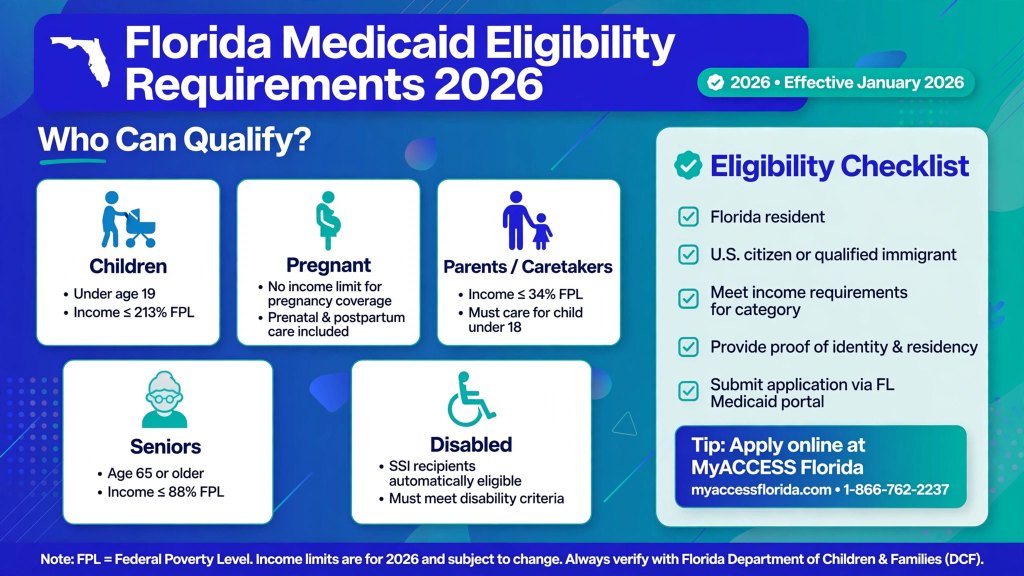
Florida Medicaid has different eligibility categories. The requirements depend on the person’s circumstances, and the rules for children may differ significantly from those for adults.
Groups that may qualify under specific program rules include:
Children: Eligible children may qualify based on factors such as age, household size, and income. Florida has different income standards for different children’s age groups.
Pregnant women: Pregnant applicants may qualify under pregnancy-related Medicaid rules. Eligibility depends on the applicable requirements and financial circumstances.
Parents and caretaker relatives: Certain parents or relatives caring for children may qualify if they meet the relevant eligibility and income requirements.
Older adults: People aged 65 or older may qualify through certain Medicaid categories, depending on their financial circumstances and other requirements.
People with qualifying disabilities: Some people with disabilities may qualify under programs that consider additional financial, medical, or other eligibility criteria.
Certain people receiving Supplemental Security Income (SSI) may receive Medicaid through the Social Security Administration’s eligibility process. Other applicants may need to apply through Florida’s Department of Children and Families.
It is important to understand that having a low income does not automatically qualify every adult for Medicaid in Florida. Florida’s eligibility categories and requirements must be considered before determining whether someone qualifies.
Your household circumstances, income, age, disability status, and other factors may affect the outcome.
If you are unsure whether you qualify, use the official MyACCESS Florida portal to review the available eligibility information and application options.
You do not have to guess your eligibility based on information from social media or an outdated online article. Official state resources are the best place to begin.
3. Learn About Florida Medicaid Income Limits
Income is another important factor when you apply for Medicaid Florida. However, there is no single income limit that applies to every applicant.
Florida uses different financial requirements for different eligibility categories. Household size and the method used to calculate countable income can also affect the decision.
For example, the income standards for a young child may be different from those for a parent or caretaker relative. Applicants seeking coverage through aged, blind, disabled, or long-term care categories may face additional financial rules.
How does household size affect eligibility?
Household size can influence the income limit used to evaluate an application. The state determines household composition according to the rules that apply to the specific program.
Depending on your circumstances, the calculation may consider tax filing relationships, a spouse, dependent children, parents, or other household details.
This is why two people with similar monthly incomes may receive different eligibility decisions.
Where can you check the latest income limits?
Florida’s Department of Children and Families publishes information about income limits for family-related Medicaid categories.
Visit the official Florida Medicaid income limits page to identify the appropriate coverage group and household size.
Check the effective date of any income chart before relying on it. Financial standards can change, and figures from an older article may no longer apply.
What if your income seems too high?
Do not automatically assume that you cannot qualify. First, identify the correct eligibility category and understand how the state calculates income for that category.
Some programs use different financial tests, and certain income exclusions or deductions may apply under specific rules.
At the same time, do not change or leave out information to make your income appear lower. Provide accurate answers and let the agency evaluate your circumstances.
Understanding the income requirements before applying can help you prepare and avoid relying on incorrect information.
4. Gather the Documents Needed to Apply
Preparing your information before starting an application can make the process easier. It also helps you answer questions accurately instead of searching for documents while completing the form.
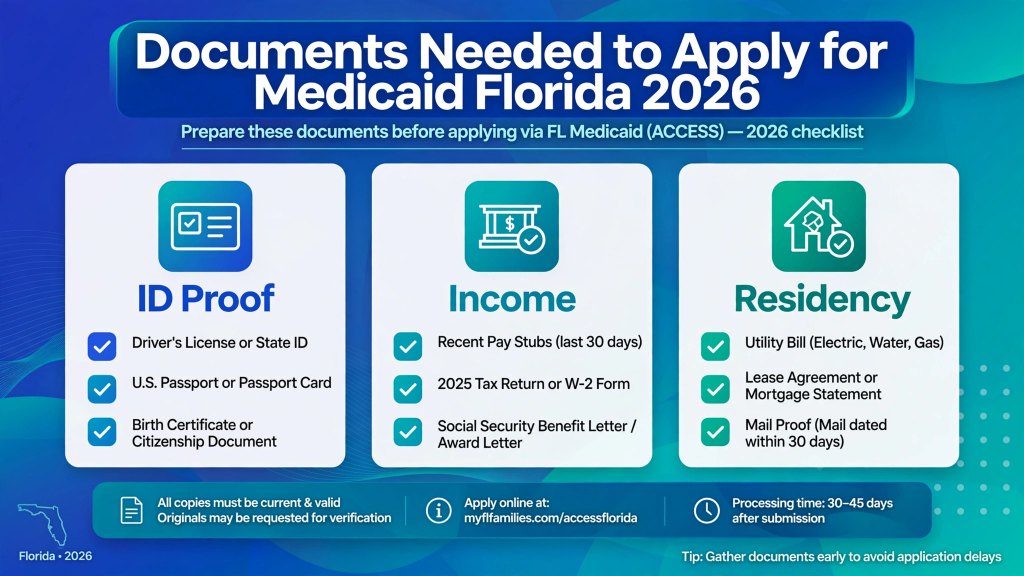
When you apply for Medicaid Florida, the state may request documents or information to verify your identity, household circumstances, income, residency, and other eligibility details.
Depending on your situation, useful information may include:
- Personal information: Your full legal name, date of birth, and contact details.
- Social Security information: Social Security numbers when required for the application.
- Residency information: Details or documents establishing your Florida residence, when requested.
- Income records: Recent pay stubs, employment information, or records of other income.
- Household information: Details about family members and relevant household relationships.
- Citizenship or immigration documentation: Information needed to determine eligibility under the applicable rules.
- Existing insurance information: Details about other health coverage, if relevant.
- Medical or disability information: Records that may be required for certain eligibility categories or services.
Not every applicant will need every item on this list. The exact requirements depend on the person’s circumstances and the program involved.
Keep your information organized
Consider creating a folder for application documents. Keep copies of anything you submit and save any confirmation number or reference details provided by the state.
If you upload documents online, follow the portal’s instructions and make sure the files are readable. If the agency asks for additional information, check the notice carefully to understand exactly what is required.
Never send sensitive documents to an unverified website or an unknown person claiming to help with your application.
Being organized will not guarantee approval, but it can help you respond more efficiently to verification requests.
5. Find Out How to Apply for Medicaid Florida Online
Many applicants prefer to complete the application online because they can access the official portal without visiting an office.
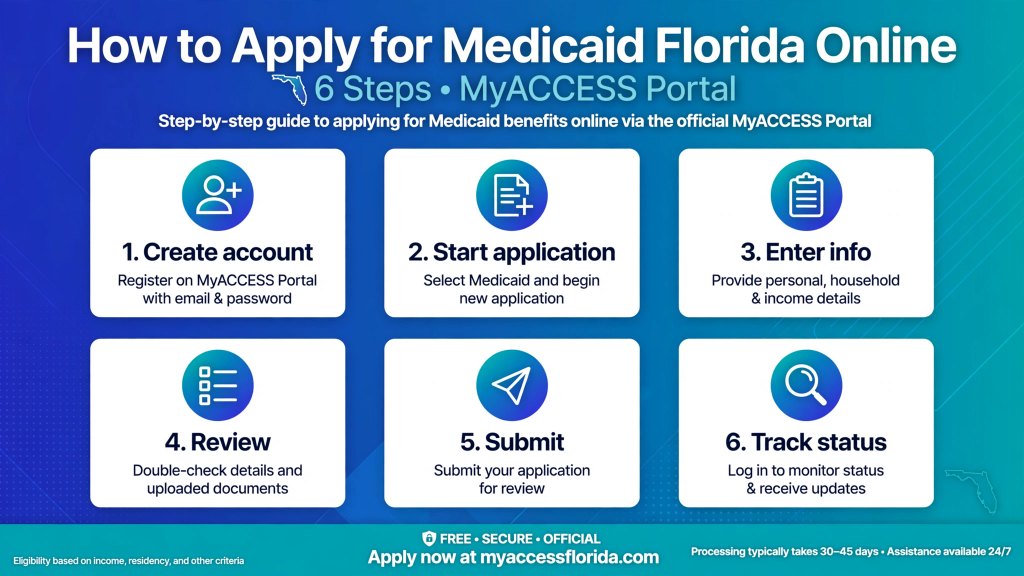
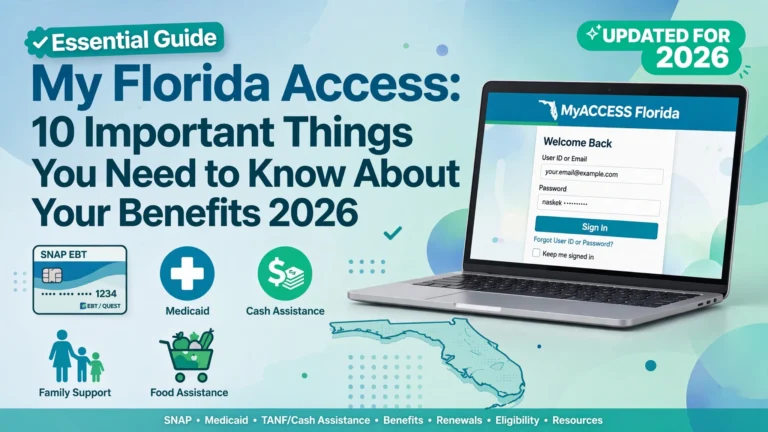
Florida’s MyACCESS portal allows residents to apply for Medicaid and manage information about eligible government benefits. You can begin through the official MyACCESS website.
Here is a simple overview of the process.
Step 1: Visit the official MyACCESS website
Open the official MyACCESS portal and review the available options.
Make sure you are using a legitimate Florida government website before entering personal information. Avoid advertisements or unrelated websites that imitate official application services.
Step 2: Create an account or sign in
Follow the portal’s current instructions to create an account or access an existing account, as applicable.
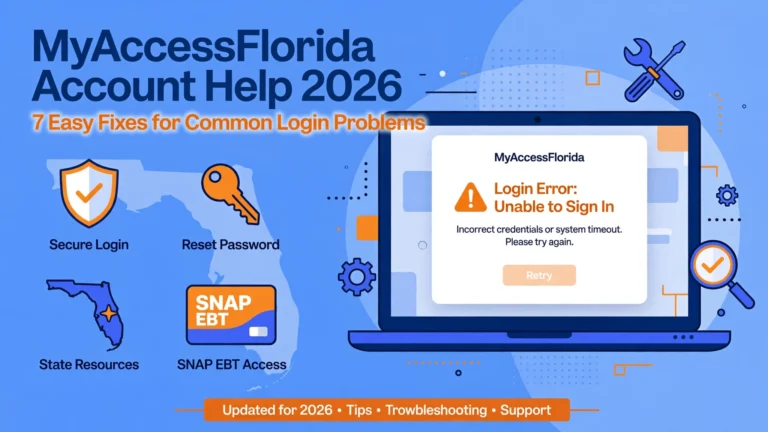
Use your own secure login information. If you already have an account, use the official password recovery process if you cannot sign in.
An online account can help you manage your application, view notices, and check its status.
Step 3: Begin the application
Select the appropriate option to apply for benefits and follow the instructions displayed on the website.
Florida uses an application system that can cover multiple assistance programs. Read the available options carefully and make sure you address the healthcare coverage you are seeking.
If you are applying for someone else, follow the portal’s instructions about household information and authorized representatives.
Step 4: Enter your personal and household information
Complete the requested questions about your circumstances.
You may need to provide details about your identity, household members, income, residency, and other relevant factors.
Answer each question honestly. Review your entries carefully because incorrect information may require clarification or correction later.
Step 5: Review and submit your application
Before submitting, check the information you entered and make sure you have completed the required sections.
Follow the portal’s instructions for submitting the application. Save any confirmation details provided so you can refer to them later.
Submitting an application does not mean that you have been approved. The state must review the information and determine whether you meet the requirements.
Step 6: Check your account for updates
After submitting your application, continue monitoring your MyACCESS account and any official notices you receive.
The agency may request supporting documents or additional information. Follow the instructions and deadlines stated in those notices.
If you cannot complete the process online, the Florida Department of Children and Families provides information about other application methods, including assistance through designated locations and community partners.
The online application process can be straightforward when you have your information ready and carefully follow each step.
6. Understand Application Processing and Follow-Up Requests
After you apply for Medicaid Florida, the next step is the state’s eligibility review.
The agency examines the information you provide and determines whether you qualify under the applicable program rules. Some applications may require additional verification before a decision can be made.
For this reason, it is important to stay informed after submitting your application.
Check for official notices
Florida’s Department of Children and Families uses notices to communicate decisions and other actions related to applications and benefits. Depending on your communication preferences, notices may be delivered electronically or by mail.
You can review available case notices through your MyACCESS account.
If the agency requests more information, read the notice carefully. It should explain what is needed and provide instructions for responding.
Submit requested documents on time
If you receive a request for proof of income, identity, or another eligibility detail, submit the required information using an approved method.
Depending on the instructions, available methods may include uploading documents through your online account, mailing them, faxing them, or delivering them to an appropriate office or community partner.
Keep a record of what you submit and when you submit it.
How long does the process take?
Processing times vary according to the application type, the information provided, and whether additional verification is required.
Do not assume that every application will be processed within the same number of days. Check the official guidance for your situation and follow any instructions in the notices you receive.
What happens after a decision?
If your application is approved, review the decision notice and any information about your coverage, benefits, or next steps.
If your application is denied, read the notice to understand the reason and whether review or appeal options are available. Follow any deadlines listed in the notice.
You can find additional information through the Florida Medicaid notice information page.
Staying organized and responding to official requests can help you manage the application process with fewer surprises.
7. Avoid Common Mistakes When Applying
Even when someone appears to meet the requirements, mistakes or missing information can complicate the application process.
Before you apply for Medicaid Florida, review these common problems and learn how to avoid them.
Mistake 1: Entering incorrect information
Check your name, date of birth, household details, income, and other answers carefully. Small errors can lead to questions or requests for corrections.
Mistake 2: Leaving out requested information
Read each section before moving to the next one. If a question does not apply to you, follow the form’s instructions instead of guessing.
Mistake 3: Using outdated income limits
Income standards can change, and the rules for one eligibility group may not apply to another. Check the current official figures for your specific category.
Mistake 4: Forgetting to submit documents
If the state asks for supporting records, make a note of the deadline and the required submission method. Keep copies of the documents you send.
Mistake 5: Ignoring account messages
Check your MyACCESS account and other official communications regularly. Missing a request may complicate the review or delay a decision.
Mistake 6: Assuming approval is automatic
Submitting an application does not guarantee coverage. The state must determine whether you qualify under the applicable rules.
Mistake 7: Paying unnecessary application fees
Applying through official Florida government channels is free. Be cautious of websites that charge a fee simply to submit a government benefits application.
You may choose to seek help understanding the process, but verify the source and any charges before sharing personal information.
By checking your answers, using official resources, and following instructions, you can approach the application process with greater confidence.
Frequently Asked Questions About Applying for Medicaid Florida
How do I apply for Medicaid Florida online?
You can begin through the official MyACCESS Florida portal. Follow the instructions, provide the requested information, and submit your application. Check your account for updates and additional document requests.
Who qualifies for Medicaid in Florida?
Certain children, pregnant women, parents or caretaker relatives, older adults, and people with qualifying disabilities may qualify under specific program rules. Eligibility depends on the applicant’s circumstances, financial requirements, and the applicable category.
Can adults with low income get Medicaid in Florida?
Some adults may qualify, but low income alone does not automatically make every adult eligible. Florida uses specific eligibility categories and financial rules. Check the official requirements for your circumstances.
What documents are needed for a Florida Medicaid application?
Depending on your situation, you may need personal details, Social Security information when required, residency information, income records, household details, and other supporting documents. The state will explain what additional information is needed.
How can I check my Florida Medicaid application status?
Sign in to your official MyACCESS account to review available application updates and notices. You can also use the contact information provided by the Florida Department of Children and Families for assistance.
Is it free to apply for Medicaid in Florida?
Yes. Applying through official government channels is free. Be cautious of unofficial websites that charge unnecessary fees or request sensitive information without a legitimate reason.
What should I do if my Medicaid application is denied?
Read the official decision notice carefully. It should explain the reason for the decision and provide information about any applicable review or appeal process. Follow the instructions and deadlines in the notice, and contact the relevant agency if you need clarification.
Can I apply for Medicaid and other Florida benefits at the same time?
Florida’s MyACCESS system supports applications for multiple assistance programs, including Medicaid, food assistance, and temporary cash assistance. Each program has its own eligibility rules, so applying for more than one program does not guarantee approval for all of them.
Conclusion: Start Your Florida Medicaid Application With Confidence
Learning how to apply for Medicaid Florida does not have to be overwhelming. The process becomes easier to understand when you break it into manageable steps and use official information.
Start by understanding the healthcare benefits available through Medicaid. Then review the eligibility requirements, check the financial rules for your category, and gather the documents you may need.
When you are ready, visit the official MyACCESS portal and follow the application instructions carefully. After submitting your information, monitor your account and respond to any requests from the state.
Remember that eligibility depends on your circumstances, and submitting an application does not guarantee approval. Current requirements should always be verified through official Florida government resources.
If you are planning to apply for Medicaid Florida in 2026, take the time to prepare your information, check the latest requirements, and keep copies of important documents. These simple steps can help you navigate the process and understand what to expect next.
Official resources: